Showing posts with label childhood. Show all posts

4.29.2014

Nymph, Sylph, Mirror-glass


The water suspends,
As warm as a womb,
It whispers currents,
From the bloom of my own
Languor.

The air, she lays the steam
So soft and slow against the mirror-glass,
So soft and slow like mother lays
Her child in the bassinet.

Then, unburdened,
And left fresh-skirted and alive with chill,
She kisses me in the lover's nook -
The crook of the neck.

Her tease is tender:
She is right.
Its time that I got up.

My eyes wander to the mirror,
But the steam lays across,
So I, still and humid,
Am a ghost-in-the-glass.

Too tall, perhaps?
Yes, that.
The spectre, it is foreign --

But perhaps a strange and elder sister of myself
Looks back through a glass darkly.
And when I nod to her,
She nods back.

Cold, heartfelt, compassionate.

And this gentility,
Perhaps,
It is enough.

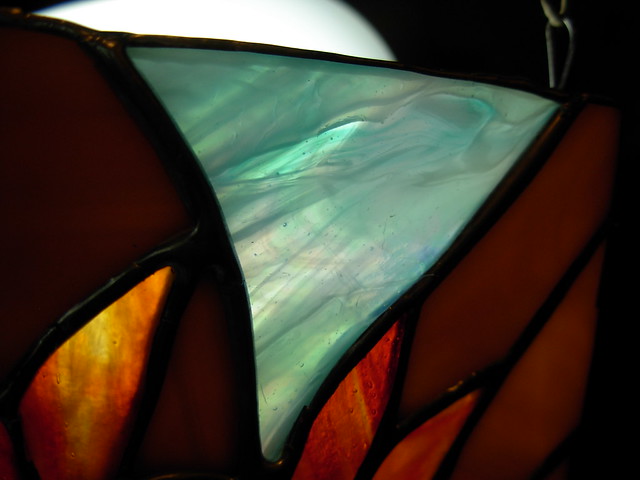
(image courtesy of nutmeg designs)

Read More......

2.09.2014

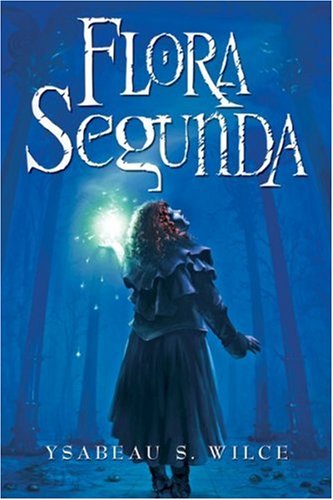
Book Review - Flora Segunda

It has been awfully long time since this blog had a book review, but then its been an awfully long time since this blog had writing often at all, and one must have words, mustn't one, eventually? At least this one.

Flora Segunda was publish in 2007, and given that there are many blogs covering YA that are wonderful and very authoritative (far more than this blogger, who reads YA the way that a walrus must eat beef - awfully rarely and with pleasant and recurring surprise that such a thing exists), the fact that the title has not come up before was a bit stunning, because its a beautiful book, that has only been more present emotionally since the reading of it. Perhaps, in part it's that simply it's been a very long time since simply reading a book. There has been squeezing in some in the corners, but not really reading, not REALLY reading in an awfully long time, and January was not the most delightful of months, so this was a wonderful book to have as a friend.

Flora, if you, gentle reader, have never heard of it either, is a book about a young girl, the heir to an old great family of the land of Calif, who is approaching the date of her Catorcena. Perhaps gentle reader you are already clever enough to have spotted something that I am boggled to say it took me about a quarter of the book to recognize - that the book is set in a fantastical version of Southern California. This was one of the great charms of the book for me, that the flavor of the magic and world building is wonderfully different from others I've read - the enemy kingdom is based around Aztec and Maya culture, the wizards are, in many ways, sort of a cross between Zorro and a gallivanting 19th century cavalry officer, though both genders (if that whets your appetite, I positively demand you read this book, and then make long emails back and forth with me and we shall make up grand stories about the inheritors of Nini Mo's ranger legacy).

The tone of this book, even apart from the setting and feel of a young magical California, is unique, I literally cannot think of another book to compare it to. At first I was concerned I would not enjoy it. With the first few sentences there was a mention of the word 'potty' in a humorous setting - in the end though, what the book did was make me realize why I DON'T usually like 'low' humor in a book aimed at children: because usually it feels like an adult condescending to the child, going 'well, I know you're too stupid to get subtler humor, so I'll throw a fart in here.' Only, the thing is, when you're thirteen (catorcena is your fourteenth birthday, a playful and clever life of the quinceanera tradition common in the parts of the US that are influenced by Mexican-American culture, which if you're not familiar with it, I recommend a google image search), well, frankly for most of us a bit of that humor IS a PART of our sense of humor. I know, I have a thirteen year old, now, and I was one once, a long time ago.

What was wonderful about this book was that the little bits of the lowbrow that came out were simply... human. Simply believable parts of the way this very human girl thinks. This came as a wonderful revelation to me, to where I could enjoy her, the same way I enjoy my own sons. Flora came across as precocious, but attractively, believably precocious instead of simply being an adult in the clothes of a child. Those parts of my heart that are pre-adolescent sympathized with her. And, this made the process of her growing up in the book - for its very much a bildungsroman in all the best ways - much more poignant and familiar and honest. In a sense watching her grow reminded me of the boys growing up in 'Finding Neverland', another book with a very wise command of what the difference between adulthood and childhood, the relative strengths and weaknesses of both.

And that was what really made the book something I will remember - the book so honestly and sympathetically observes growing up ( a process, after all, that isn't something one succeeds or fails at, so much as just happens to do whether one likes it or not, in so many ways), that what in other writer's hands might have been little more than fluff and farce carries a force and poignancy that trickles into the heart and rests there. The books delicacy of touch grants the reader, perhaps, the right, to be, once again, a child, a right that we as adults, so seldom are given access to. My oldest son read it too, and I wish now I'd read it at his age, because I'd love to understand the difference in the way I might have felt it back then.

The mind boggling thing about the book is that, with all the deftness and sympathy and gentleness, how much serious ground the book truly does cover. Living with mental illness, the traumatic effects of war, the dark power of patriotism, racism, and so much of the disillusioning sorrow of late childhood. At the end of the book, absolutely none in Flora's life, no matter how well-meaning, really seems to be terribly virtuous, or even really fully capable of loving Flora completely, in the way that a child needs to be loved, completely, by someone. There is, in the end, absolutely none entirely trustworthy in her life by the final page. But the beauty of it is that, this doesn't make it a tragedy - it simply smiles gently at you and says 'You see? That's what you'll learn when you grow up,' and then proceeds to delicately guide you into loving every one of those deficient, imperfect, untrustworthy people, in spite of it all.

I could go on - I could write a whole other reverent post about the sheer beauty of the senses in the novel - there are sensations in this novel that I swear Ms Wilce snitched from the inside of my dreams. But the poetry of this novel is so deeply integrated into the power of the plot, that I'd just start repeating myself.

Read More......

1.18.2014

Comfort Food

Yes, that is indeed a gigantic Kraft Dinner noodle. Thank you, America
I really, really love Peanut Butter and Jelly sandwiches.

No, you're smiling right now, I know. You're thinking, "Haha, yeah, me too, PBJ's, that's the life."

Stop that.

This is bigger than camaraderie. I love them. Love. Like, the actual emotion. Like, I have an intense, fraught, passionate relationship with peanut butter and jelly sandwiches.

Look at it. Tell me this doesn't look beautiful.
Macaroni and Cheese is another one. I like the cheap Kraft kind even (though I LOVE it when its gussied up). Macaroni and Cheese, I... oh god. If I could  wake tomorrow, and have a thick, gooey PBJ for lunch and be able to play around with throwing different things in macaroni for dinner, every day, for the rest of my life, I would reconsider my ongoing feud with God.

*weeps, like a passionate art student at the Louvre*
Unquestionably, if I were to describe my affection for these two foods, it would be that they are 'comfort foods'.  Neither of these are the haute cuisine dandies that one is supposed to dream about. Macaroni is not my foie gras. It is, in the film by the same name, my ratatouille, precious because it makes me feel small and safe and simple, in a way adulthood does not.

I loved these foods as a child and I certainly took comfort in them. but it was of a different sort. Having a peanut butter sandwich, on the one hand was simply delicious, but in terms of comfort... well, I don't really remember. I remember desiring them when I was upset, or when I wished to be brave. If I were to guess, I vaguely remember them giving me a feeling of the general predictability of the world. Some things, in a child's world, must be anchors, they must not move. My mother must love me and want the best for me. My mind must be dependable. The trees must always stay there, and there must always be a bed that is mine. And peanut butter sandwiches must always taste and feel just so.
You think Mothers always love you? You sad little fool!
It is different now. Now, I now none of those things are altogether true. I live, adulthood tells me, in a world where there are no anchors (where one moors, if you will, at sea).


Everything in life is the possible subject of catastrophic change. Love can end, children can die, trees can fall, or worse, rot in place, and heaven could very well just be the wishful thinking of someone very long ago. The sea batters at the ship of maturity, and you must sail, though your charts are lost and your compass swings wild.

But.

Peanut butter sandwiches are still the same. And when you eat one, for just a moment, you can curl up inside of it and say, "Yes, I know, I must be a grownup now, and it frightens me, and I don't recognize this thing I've become. But... I AM the same person. I still have a little heart that sat at the diamond-cut wood table that mother bought from the gypsies ( I miss that table) and ate a sandwich that tasted just like this. Just precisely like this. And it is a little less hopeless, a little less frightening.

Thanks macaroni.

Read More......

12.06.2012

Once on Monday


Once on Monday
Twice on Tue,
Thrice for Thursday,
Friday - once.
On Saturday, tis deeper done
So Sunday's rosy rivers run.
Then Monday comes,
And once again,
The kiss against,
The clammy skin.
The children's laughs
Are beet-juice red
And echo 'round
The riverbeds.

Read More......

11.21.2012

Ten Thousand Forgotten Things

When I was young, I saw ten thousand things
Of which my older eyes have now grown blind.
The shadows of them haunt me, but the sight
Is now forbidden. Secrets they might tell
Have poured into the belly of my ear
But they are past recall - the child's mind
Is painted white,
A house where nothing dwells.

And it was queer,

To try to think of things when I was young,
To try to tell the secrets I had heard.
Until I learned the way of elder men,
And learned to keep them safe within
the keep of memory:
The virtuous sin,
Of turning flying thoughts into caged birds
So as to know the songs that they had sung.

And then the birds without the cages flee,
And leave the keep to memory and me.
The mind builds moats around its  storyland:
To keep what's in within, what's out is banned.

Read More......

12.11.2010

Fear and a Handful of Dust

I made a snide comment earlier today, about Victor Hugo, how certain elements exist in all his books - this was in mind, because I've just finished listening to my third of his novels: Toilers of the Sea, a very Hugo-ish novel about a man from one of the Channel Islands struggling against the elements. I loved the novel to death, another consistent element of Victor Hugo novels, that I neglected to mention this morning. It was wonderful, I listened to the end while grocery shopping, and knew just where it would end up pretty early on, but just about started crying walking the aisles of the grocery store.


So, if I enjoyed it so much, why did I feel the urge to make a snide comment?

In specific, here is what I said:

"How to recognize a Victor Hugo novel:
1) Accidental love triangle
2) Heroic Gesture
3) Suicide near the end
4) Tangents
5) French People"

I do not intend to make of this comment more than it was. I think it sounded not too mean-spirited, a sort of gentle ribbing between friends. So, this post will not be one of my confessionals, I promise. But the question itself is interesting to me - why, if I really enjoyed the novel, did I feel the need to be snarky about it? I didn't say anything nice about it, which is what one would expect in a perfect world where I loved the novel. Why?

Well, I will tell you, after much thinking - it's a kind of self-defense. I don't think this is particularly uncommon. To love a thing is to give power to it, and power to others who know of your love. Love is a distilled and keened kind of vulnerability. And we live in a world, honestly, where it's necessary to keep yourself safe. Say all you will about how it should be from a practical standpoing, but having had people laugh over things I thought were sacred and beautiful, and it's a painful thing. I've done the laughing too, I know how easy - and socially acceptable - it is to twist each other's knives. 

Fear of other people (or of myself in the midst of other people, more precisely), though, is a theme I probably talk abotu too much already. What's more interesting is that part of this fear, this vulnerability is a vulnerability to the book itself. 

People spend a great deal of time talking about how a book can change your life for the better, how books can salve wounds, or staunch sorrows, or teach lessons. But people seldom mention the ways a book can stab you, mock you, or break your heart. In order to let a book change you, you HAVE to unshield yourself. 

I have experienced this myself, in the best and worst of books. I read a book earlier this year that nudged me into a good few months of depression. I read a Jeffrey Archer book when I was about 12 that has a scene that has gnawed painfully at me ever since. Nor is it simply a matter of 'this book really made me sad'. In my more lucid moments, I can look at some of the books that I love, and see what they've made of me - and how it is sometimes a bad thing. Victor Hugo is a good example, one that probably goes back to why I avoided being honest with myself in my tweet.

I read Les Mis a long, long time ago, and loved it. Something in the way it echoed and spoke felt very familiar and honest to me. The problem is, of course, Hugo is a wild-eyed romantic idealist, and the echoes of his hopes for a lot of things - for love, for revolution, for the success of virtue over the world - do not necessarily reflect the world. One of the reasons I never dated in high school (one reason, of many), for instance, is because all of my favorite love stories (Valjean and Fantine, Quasimodo and Esmeralda, to an extent Romney Leigh and Aurora Leigh) were these wild, chaste, hopeless loves, loves that cannot be, and that are beautiful because they exist precisely BECAUSE they cannot be. Love, in real life, doesn't work that way. When I did finally get married, this desire for the ideal, for a love affair that told a story, instead of a love affair that was real and present, gnawed at me, made me feel as if I was failing to live up to my ideals, made me do wildly, stupidly foolish things as a result. I don't BLAME this on Victor Hugo (and his various friends). To write an ideal is beautiful and valuable, and I would be horrified if I could forget I'd ever read them. To an extent, this part of Hugo is so imbued into me, now, that I can't even realistically tell you 'this is where I stop and Hugo starts' - I am to an extent the man that Les Miserables made me (along with many other books). But, to be the man that Les Miserables made me is as dangerous (for me and others) as it is comforting. 

Yesterday, Ms Amy put up a quote about characters on Tumblr, and I think it gnaws, in a way, at the duality of this power. The thing that caught me up most in the quote was that the book tv show, in this case, tore her in two different directions: it made her wonder if she could keep watching, and knowing she won't ever not watch. There is something horrible about a well-written character, a great and terrible part to it, because if we allow ourselves to engage entirely with a book, then we can feel for these figments of someone else's imagination as powerfully as for a real person. This is a dangerous proposition, one that produces situations that are almost, ALMOST horrifying. When I look back on my childhood, and try to think of the people I felt closest to, I felt far closer to Anne Shirley, Ozma, Galadriel, than I did to any of my real life friends. There is a little part of me that thinks of Wuthering Heights as a companion from high school who has stayed closer to me than any of my other companions of that time. And my relationship with Emily Dickinson, now, bears a sort of emotional intimacy in my mind, a sort of seriousness and intensity, that makes me feel at times as if I am waiting for a friend to come home who never will. But, you don't talk about it this way in real life, in everyday. IF you do, it's a joke, it's playing. Celebrating Emily Dickinson's birthday is a silly thing. REmembering how I felt about Galadriel is sort aww-cute-adorable in the way that we react to any story about the innocence of childhood. I see other people say things about books, and sometimes, I think I sense that same hesitance, that same sort of terrified self-ignorance, and I wonder if this is something other people feel.

The other thing Ms Amy's quote did, the thing that finally made me change the original topic I was going to write about in reaction to Toilers of the Sea (the idea of 'struggling against nature' and 'subduing nature'). In the middle of the quote, as she talks about how a character exists in the nether regions of the emotions she inspires, she (mis)quotes T.S. Eliot's most famous quote: "I will show you fear in a handful of dust." The full quote is longer:

(Come in under the shadow of this red rock),
And I will show you something different from either
Your shadow morning striding behind you
Or your shadow at evening rising to meet you;
I will show you fear in a handful of dust.

I will not begin to pretend that I knew what Eliot 'meant' in the Wasteland. I know people spend their lives trying to understand the poem. But for me, this gnawed at me, when I first read it, and again when I saw this in the midst of Amy's quote yesterday. To me, feeling about a person is like carrying a shadow - we can never carry a shadow on purpose, because it isn't really there, but we carry one continuously nevertheless, a shadow that can loom larger and larger as the sun gets cloer and farther from the horizon, until night when the shadow melt into the omni-shadow of lightlessness, and everyone's shadows sort of mingle until the sun returns to tease our bits apart into individual self. Emotions are only safe because, at some level, like a shadow they remain attached when the sun comes up. We each carry our own, and noone else's. To love a thing we have made up ourselves, or interpolated from a book, this is different. There is nothing casting the shadow, it's like a reverse kaleidoscope, little shafts of shadow ever whirling inwards and inwards on themselves, inescpable, and ever comingling, perhaps to form our own shadows. Imbued with meaning, but completely ineffable, inseperable (this happens, eventually with people too, we create our own internal shadows of them). But that is the handful of dust - the infinitely ineffable, gathered together to stare at, to see the two simultaneous horrors, that that which we thought was nothing, was escapable, is in fact a thing, a thing that comes about and can be held in the hand, and msut be reckoned, and at the same time, that all the significances of the world, all the things we feel matter, are just as much nothing as this nothing. Shadows falling, overlapping, combing and shifting, passing through each other, affecting and reflecting (or the reverse of reflecting), but still at some level, atomic, able to touch and combine only in the darkest, shortest moments. This simultaneous isolation into individuality, and knowledge that one's self is simply an absence, the reverse shadow of all the things that have made it, is the struggle that religions have been born over, that philosophers have tried to rationalize, that humans conquer nations and throw themselves off bridges for. And narrative is as close as we can get to it, which is it's combination, in a way of horror and power and beauty all at once. 

People always quote Nietzsche when he said that if you stare at the abyss long enough, the abyss stares back. Then why do men stare at the abyss so long? Maybe it's that the abyss is the only thing that can truly stare back.

Read More......

3.29.2010

Responsible Escapism in Literature


One of the frustrating parts of being a reader is (as with a lot of parts of life) dealing with snobbery. This is a danger that takes a special and easily recognizable form when you read a lot of old books. There is the temptation to segregate the world into two spheres: those things which are worthy of notice, and those things which are not.

Of course, this leads to a number of answerless arguments: what is the purpose of literature? How do you recognize good literature? What makes literature a classic, as opposed to just a fun read? These questions are unanswerable, in part, because they're irrelevant. Literature, for most people, is like any form of art - it is worth experiencing if it makes us a better person. This can be in a little way (cheering up a bad day, for instance) or in a monumental way (changing one's outlook on life), but nonetheless, that's what literature is for. If Twilight improves you as a person, it's a good book, for you. If the Bible does nothing for you, it's a bad book for you (or, you're just not ready for it. On both ends of the spectrum, books change over time).

This isn't to preclude all arguments over whether literature is 'good'. If a book is good for two people, and out and out damaging for two billion people, then it's important for us to talk about that. If a book cheers up some people, but also subtly teaches misogny or racism, then there's a reason we have conversations and argue about it. But in the end, these conversations can't be inspired by exclusivity and a search for a canon. They have to, simply, be a kindness we do each other, helping each other avoid books that hurt us, and find books that make us better people. Anything that distracts us from that goal is damaging, in the end, to our search for happiness.

One of these damaging fallacies is the subtle snobbery against books that are 'escapist'. I hesitate even to write the book. My friends who are fans of 'genre' (another subtle slur word) literature probably growl and get their hackles up just hearing the word. Fantasy, mysteries, historical romances, these sorts of books, says the conventional wisdom, are books that have some mild value as simple entertainment, but they're 'just escapism' - they don't have any intrinsic worth, except as a way to wind down and escape. They are the sitcoms of books, says this wisdom.

Examine this for a moment, though: it rests on the assumption that 'escape' is 'just for fun'. That the only value in becoming someone, something, or somewhere else is that it lets one ignore one's problems for a bit. And, in my personal opinion, no assumption could be more wrong.

'Escape' (already a loaded, and probably inappropriate word) is one of the most ancient and beautiful traditions of creative endeavor. Think of it - escape is the ability to put one's mind somewhere else. 'Escape' is, the root of all our ideas of divinity. It is the schoolmaster of empathy and selflessness. It's one of the most natural forms of play and self-education. It's a powerful form of introspection, and used by psychologists and sociologists every day.  Putting one's self in someone else's place (real or imaginary) is at once playful, solemn, sacred, and benevolent, if done with the right spirit. (If you would like me to further justify any of these points, let me know - the essay was already getting a bit long).

But, nonetheless, we think of escape as the realm of children's literature. Something that we need when we are young, but that we cease to need when we age. But then, at the same time, we wonder why children are so much more openminded, so much quicker to learn and grow, so much more self-assured and powerfully vulnerable than grownups are. 'Mere' escapism is a vital part of our growth throughout our lives, not something that simply helps us figure out how to get to adulthood.

This week, at the GENIUS suggestion of my friend Nymeth, I read 'Emma', a Manga by Kaoru Mori about a Victorian maid and a rich young gentleman who fall in love. It was the most wonderful escape I've had in a very long time, and one that has, unmistakably, made me a better person for having read it. The story was amazingly, powerfully immersive, rich with detail, and with the ineffable sense of it being a truly different world, instead of simply a modern story set in dresses and gaslights.

And, from a 'literary' perspective, I can make my arguments. The artist/author is a careful student of symbolism and human nature, tiny subconscious clues suggesting depths to the individual characters that would have taken a book of Dickensian prose to suggest otherwise. The art in this (and this is from someone who doesn't always like the Manga art style) was beautiful, sweeping and echoing across the pages. This is the sort of book that a Bronte would write in different circumstances, and as someone who thinks of the Bronte as more akin to sisters and friends than favorite authors, that's the most sincere praise I can offer.

But to an extent, this misses the point - or more (because these elements are not ones I want to say aren't beautiful), it presumes that there is the important elements of the story, and then there's the ones that are just there to make it easy to read. Emma is very much an escapist book, and part of the appeal of the book for me was that I really, really wanted to be someone else for a little while. OF course, this could be a bad thing. This could mean I simply 'veg out' and read something useless and just pretend my problems don't exist for a while. Escapist reading (like any reading) can be a drug, and a very dangerous one.

But like many of the most beautiful of escapist books, Emma is both an honest and an ennobling experience, one that, instead of tricking you with a sense of false betterness, simply lets you stretch into a place you cannot normally be, to feel it's freedoms, and it's constraints, to let you play quietly with the pieces of you that resonate in the work, the pieces that otherwise atrophy, so that when they're needed they're too tired to stand. To, like the Greeks with their myths, stretch and figure the shards of the divine, by reflecting them off of the selves we choose to be, instead of simply the one life we live simply because of circumstance. That's what 'escapism' should be - the refreshing rites we play at naively as children, and that we practice with a whimsical solemn knowledge when we're grown.

(Image: Princess Hyacinth, by Alphonse Mucha. Incidentally, Mucha, one of my favorite artists, was a 'low artist' himself - painting everything from cigarette ads to theatre posters to advert calendars)

Read More......

3.18.2010

Two Poems about Growing Up


Two Poems on Growing Up

I

The recipe for 'grownup' is'nt complex -
Three things: the first a set of faces: one
For sneering, chuckling, shouting. Thing the next:
A roll of bandages for putting on
If you, by chance should graze your grownup blades
Across the tender skin beneath your wrist.
The last? You need a book, blank or pre-writ,
To exercise the parts you might have missed
When scalpelling out the withered child bits.
They're like the burn-marks on a frying pan -
You grind them down, but always leave that look
Of bloody-brown, like paint from ancient hands
Cluthched into walls of caverns. But a book
Will let the crackling remnants run their course,
Then shut them in their covers by sheer force.

II

The Cancer of Maturity
Metastizes slow
It splays across your bangs, at first
And creeps into your clothes.

It slips onto your lips at night,
Your throat, and then your breast
Then Lodges in your diaphraghm
And echoes with your breath.

The lungs rebel and bloom their youth
Into an angry mass,
A cancer as the cancer's foe -
The two begin to clash.

But youth imbues it's vital strength
Into a killing blow.
Adulthood reels, but lives, then waits,
Metastasizing slow.

(Image by Valerie Everett. Herein describing the inside of my wrist (which, no, I've never 'grazed' with 'grownup blades', and never intend to, no worries :D), this concludes my somewhat irregular tour of the pictures on the top of my blog. )

Read More......

12.03.2009

Love Song to Emily and Sylvia

All my loves as a child that would whisper my ears
        with a fountain pen
                Instead of their lips -
                Instead of their tongues
        Their manuscripts.
        Such pretty ghosts!
                I made my oaths
                That when I grew
                I'd spin and spin
                        A reliquary sack to hold
                        Their paper-bones,
                All dry, all dear
                It makes me shiver even now!
                        I would appoint
                        Myself to be a pot of earth
                        Myself anoint
                        To be their parish plot
                I'd take the bones,
                And plant them deep
                like tulip bulbs
                Perhaps to sprout -
        Perhaps to bud - and then
Like necromancy - bloom and seed
        "A Lazarus show" in
        An "unlocked rose"
        For a
"Pretty Red Heart"
        For a
"Wand'ring Repose"

All my childhood loves spoke in gospels
        In very dark rooms,
        Staring into the gloom
                To adjust to the scarcity,
                Dilate the eyes,
                        And bend over the loom,
                Let the Word feed the twine
                Let the Flesh weave doom
                Let the Spirit cut ends
                So my prophets can stand
        And turn back from the tomb,
                In a dazzle of sun,
                They are 'bronzed' like the gods
                        Grown 'quick with the seed'
                        Of forbidden-fruit trees -
                Milk and honey could flow
                From the soles of those feet!
        I was Israel's child, and I begged them
        "Come down from your Nebo!"
        They told me 'Be Joshua!
        Jordan will part!'
        And the sun clave their tongues
        And a flame filled their hearts!
But there's futures
        That cowards can see
        To which sibyls are blind.
So I hid in my house,
        From the flooding divine,
So my "heart" grew "root-pale"
        From a surplus of damp
And an absence of rhyme
                        

All my loves stood on pyres
        Bound to stakes
                With their girdles and corsetting cord
        With their skirts
                That would wave like a standard of war
        With their skirts
                That can't stretch o'er a cavalry horse,
        I longed to stand so -
        Just as still -
        Just as bold -
                I wanted to ossify -
                        Turn to a tree
                        Or a great old stone
                        Something round,
                        Something still and alone -
                How I longed
                        To be someone with fate in her tongue
                So I made up a sorrow
                        And said it was true
                So I put on a silk shirt
                        And new saddle shoes
                        It's the best I could do
                 Just an ill-made farce.
        And a cynical heart
        Made for riding "the rack and the screw."
So I stitched up a bride
        Picked the sticky worm-pearls
        From her Gypsy-Jew eyes
And I said
"I do,
I do"

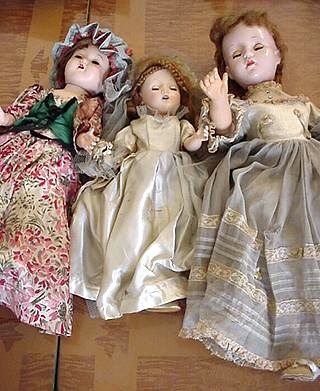
(originally from 2007, revised several times. Still not happy with it. Numerous esoteric references to Emily Dickinson and Sylvia Plath poems. Picture by eraphernalia_vintage)

Read More......

8.13.2009

A Child is Like a Moon

A child is like a moon -
     A shadow's pass at light.
It emanates, unbidden
     from the unconsoling night.
The glimmer born of miracle -
     We think - it's partly true.
Reflection on a firmament
     In velveteen and blue.
Just pretty borrowers of beams
     that circumnavigate
a star - a mother - only
     Earthen umbra obfuscates
That sacred glow:
                    Eclipsed perhaps
     On scattered, gloomy night -
But in eclipse, more present -
     The moon will always seek the light
(Image by Boston Bill) I wrote this poem originally in 2006 for my mother. It's been edited a bit since then.

Read More......

4.27.2009

A Dream I Think I Had as a Child.

I reread what I wrote about Christmas this year, after spending all morning tramping up and down the halls of Pearson with my headphones on. Don't you love the feeling of having headphones on, when there are people around?

It reminds me of this dream I had when I was a child. I was walking through school, and the halls were full of people, talking, gossiping, complaining, telling jokes, making the noise that makes human beings so wonderful and awful, and then I found my hand on a scarf, a magical blue scarf. I drew it over the top of my head, over my ears, around my neck, behind my nape, In the way that I imagined Moslem women must wrap it. The silk muffled sound, and at first I felt as if I were wearing earmuffs. Then, I realized people weren't making the same words. There faces were the same, the same joking, gossiping faces, but the words were different, the gossiper was snivelling weakly, like a beaten dog, the joker was desperately shouting in the middle of a group of people, cackling like hyenas, wild and blood edged. And it was strange, because the faces still matched, though the tone had changed, and evryone was so muffled at first, but it intensified, until it was all louder than it had been, and I felt disoriented and dizzy. Then, I saw one face, standing to the side, an unremarkable, dark face, not speaking, the only face that didn't speak, and it looked at me, and it smiled, a weird smile, sympathetic and taunting all at once, and it murmured something, something very low, but I couldn't hear it, so I took off the scarf, and the face was gone.

That's what it's like, walking the halls with your headphones. It's like, perhaps there is a narrative to everything, after all.


Read More......