


Book Review - Flora Segunda
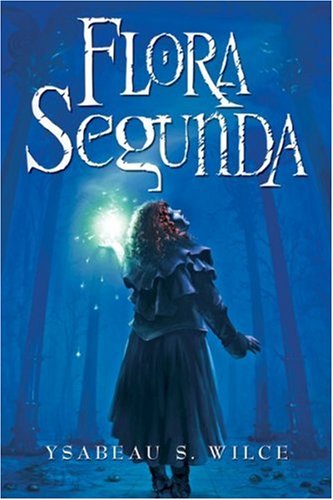
Flora Segunda was publish in 2007, and given that there are many blogs covering YA that are wonderful and very authoritative (far more than this blogger, who reads YA the way that a walrus must eat beef - awfully rarely and with pleasant and recurring surprise that such a thing exists), the fact that the title has not come up before was a bit stunning, because its a beautiful book, that has only been more present emotionally since the reading of it. Perhaps, in part it's that simply it's been a very long time since simply reading a book. There has been squeezing in some in the corners, but not really reading, not REALLY reading in an awfully long time, and January was not the most delightful of months, so this was a wonderful book to have as a friend.
Flora, if you, gentle reader, have never heard of it either, is a book about a young girl, the heir to an old great family of the land of Calif, who is approaching the date of her Catorcena. Perhaps gentle reader you are already clever enough to have spotted something that I am boggled to say it took me about a quarter of the book to recognize - that the book is set in a fantastical version of Southern California. This was one of the great charms of the book for me, that the flavor of the magic and world building is wonderfully different from others I've read - the enemy kingdom is based around Aztec and Maya culture, the wizards are, in many ways, sort of a cross between Zorro and a gallivanting 19th century cavalry officer, though both genders (if that whets your appetite, I positively demand you read this book, and then make long emails back and forth with me and we shall make up grand stories about the inheritors of Nini Mo's ranger legacy).
The tone of this book, even apart from the setting and feel of a young magical California, is unique, I literally cannot think of another book to compare it to. At first I was concerned I would not enjoy it. With the first few sentences there was a mention of the word 'potty' in a humorous setting - in the end though, what the book did was make me realize why I DON'T usually like 'low' humor in a book aimed at children: because usually it feels like an adult condescending to the child, going 'well, I know you're too stupid to get subtler humor, so I'll throw a fart in here.' Only, the thing is, when you're thirteen (catorcena is your fourteenth birthday, a playful and clever life of the quinceanera tradition common in the parts of the US that are influenced by Mexican-American culture, which if you're not familiar with it, I recommend a google image search), well, frankly for most of us a bit of that humor IS a PART of our sense of humor. I know, I have a thirteen year old, now, and I was one once, a long time ago.
What was wonderful about this book was that the little bits of the lowbrow that came out were simply... human. Simply believable parts of the way this very human girl thinks. This came as a wonderful revelation to me, to where I could enjoy her, the same way I enjoy my own sons. Flora came across as precocious, but attractively, believably precocious instead of simply being an adult in the clothes of a child. Those parts of my heart that are pre-adolescent sympathized with her. And, this made the process of her growing up in the book - for its very much a bildungsroman in all the best ways - much more poignant and familiar and honest. In a sense watching her grow reminded me of the boys growing up in 'Finding Neverland', another book with a very wise command of what the difference between adulthood and childhood, the relative strengths and weaknesses of both.
And that was what really made the book something I will remember - the book so honestly and sympathetically observes growing up ( a process, after all, that isn't something one succeeds or fails at, so much as just happens to do whether one likes it or not, in so many ways), that what in other writer's hands might have been little more than fluff and farce carries a force and poignancy that trickles into the heart and rests there. The books delicacy of touch grants the reader, perhaps, the right, to be, once again, a child, a right that we as adults, so seldom are given access to. My oldest son read it too, and I wish now I'd read it at his age, because I'd love to understand the difference in the way I might have felt it back then.
The mind boggling thing about the book is that, with all the deftness and sympathy and gentleness, how much serious ground the book truly does cover. Living with mental illness, the traumatic effects of war, the dark power of patriotism, racism, and so much of the disillusioning sorrow of late childhood. At the end of the book, absolutely none in Flora's life, no matter how well-meaning, really seems to be terribly virtuous, or even really fully capable of loving Flora completely, in the way that a child needs to be loved, completely, by someone. There is, in the end, absolutely none entirely trustworthy in her life by the final page. But the beauty of it is that, this doesn't make it a tragedy - it simply smiles gently at you and says 'You see? That's what you'll learn when you grow up,' and then proceeds to delicately guide you into loving every one of those deficient, imperfect, untrustworthy people, in spite of it all.
I could go on - I could write a whole other reverent post about the sheer beauty of the senses in the novel - there are sensations in this novel that I swear Ms Wilce snitched from the inside of my dreams. But the poetry of this novel is so deeply integrated into the power of the plot, that I'd just start repeating myself. Read More......


