Showing posts with label gender. Show all posts

7.05.2013

For the Young Blades


Heavy-lidded, aren't we, 
My Friday morning damsels?

The young blades canter past
The dark window of a once-apothecary,
Eerie shadows of a hazy red bulb 
Cast upon the Asphodels of skin.

My arms are a pornography,
Oh so ever pure, and slender smooth,
My face rests on a strumpet's neck,
That begs for fingers, implements:

There is nothing so delectable
As virgin flesh. 

Yes darling one, put on a subtle pout,
Yes little bitch, half-close those bedroom eyes.
Whicker those palms like a horses chuckle:

The way my skin shivers -
Taut and plump with my hydration.
Languor running,
Manicured,
A single finger up and down
The muscle that embraces
My vulnerable throat.

The young blades canter past
The dark window, of a once-apothecary,
Eerie shadows of a hazy red bulb 
Cast upon the Asphodels of skin.

(Image by Anderson's All-Purpose)

Read More......

11.28.2012

Duetto


My enemy, each morning in the chill
  Of shining white and biting light,
My enemy, so close at break of day,
  Our lips too close to kiss,
  Our eyes too close for sight,
My teeth are bared,
  Your flesh too close to bite.
 
        Your smile is strange, this morning, oh my love,
           Did you forget the chessboard that we set?
        You slid your bishop, can you then resent,
          The queen I prod against your parapets?
          The knight your king's engaging in a tete-a-tete?
        The same way that we spoke
          When first we met!
 
My enemy, I thought that black and white,
  Sufficient stirred, by deed and word,
Could blend into a self-sufficient grey.
  My enemy, a thought occurred:
  That I was like a broken-winged bird,
And broken winged birds must learn to love the rats.
  In retrospect, it seems absurd --
 
        Hush now, my best beloved! You are mine.
          Bound closer than a wedding band,
          Upon your shriveled hand.
        Hush now, my best beloved: You are mine,
          Bound like the tide is bound unto the land.
          You be the lady, darling, I will be the man.
        Our body is a little girl's tea party, now,
          Where we two sit, and play at pat-a-pan.

Mine enemy, I beg of you, one day,
A single day, let it be today.

        Hush now, my best beloved! Go to sleep!
          You wished to be the one who lives within the mirror-glass,
        We signed our banns, and you agreed,
          You said that all you wanted, now, was rest.
          Your labors, then my darling one, are past.

(Image: Madame Jeantaud by Degas)

Read More......

11.08.2012

Down With "Male Role Models"

(Dear, Ms Amy - you did ask me to write essays, so I am doing my best for you!)

As a preface, I have to apologize to all my friends who write such lovely well organized essays, as well as to my children for my marked hypocrisy. I tried, I truly did, to outline this post before I began, to give it some semblance of organization. Alas, I failed. You get what you get.


At the prodding of a recent link from @booksmugglers on twitter, I recently read this at the LA Review of Books, the latest in a long string of essays about how little boys are being destroyed by 'girl books'. I will leave that where it is. I sound snarky about it, but that is unfair, because the whole subject really IS personally troubling to me - not because I think there are a dearth of books where stuff blows up and boys don't have to think about feelings. In a culture where major outlets of high culture are celebrating the release of James Bond films, to be perfectly frank, this concern seems just a WEE bit overstated to me. But that isn't much of a response. Luckily, there are so many other intelligent people on the internet who formulate the rsponses that I might feel, but can't really think out into words.

One response I've always found intriguing (aside from the marvelous numerical suggestion that there is NOT a shortage of boy authors and books, etc, etc, etc in our culutre, and the decline of male performance education is not due to an evil cabal of lady fic writers trying to bore boys to tears by forcing them to read the Hunger Games... or something), is the counter argument that perhaps, we as a culture need to accept that if a boy wants a role model of how to be strong and brave and what not, well, he could make Katniss as his role model just as easily as his sister, just like many a girl in my childhood fought to be able to Robin Hood when we played on the playground despite his conspicuous lack of breasts. 

But I did say intriguing, not compelling, and I couldn't figure just exactly WHY I could never COMPLETELY buy into this theory. I mean, this is me. I spent my childhood wishing I could be Princess Ozma, for goodness sake (and by the way, if you liked the Wizard of Oz and you're not reading this webcomic, go try it - plus the artist is a terrifically nice lady (the one I've met online (triple parentheses for the win - I'm a programmer, I'm allowed))). I ought to be the first one to say 'YES! ROLE MODELS FOR THE WIN! WHO CARES IF THEY GOTS BITS!' And, let me emphasize, I don't DISAGREE with this statement entirely either. 

In the words of Luther Heggs, let me clarify this.

So, turn for a moment to the aforementioned essay in the LARB. Read this quote:
But as we debate ad nauseam whether, for example, Bella Swan is a dangerous role model for young women, we’ve neglected to ask the corresponding question: what does it tell young men when Edward Cullen and Jacob Black are the role models available to them? Are these barely-contained monsters really the best we can imagine?
Now, let me say, I took some playful jabs at the idea of gender essentialism, but I do not mean them as any sort of attack on the author of the article. Her essay was written in general with much more care and erudition than I imagine I'm putting into mine, honestly. But this line carries the thread that, for me, when you pull it the entire sweater falls apart. Because ask yourself this - do you think Ms Meyer is actually hoping that more little boys will end up like Edward and Jacob? To reference elsewhere in the article, do you think SE Hinton wants more boys to act like the characters from the Outsiders? Do you think, say, the point of Salinger's Catcher in the Rye was to give boys a model to live their lives by?

This is the problem with the comparison to the good old days of Uncle Tom's Cabin elsewhere in the essay: to compare Eddie Cullen to, say, the boy from Uncle Tom's Cabin is to make a mistake, because undoubtedly, Ms Stowe WANTS boys to read Uncle Tom's Cabin and think 'yes, yes, that is the kind of boy I should be like.' To say that boy characters are troubled and negative, then, is very different from saying that boy ROLE MODELS are different.

After all, though, the problem is that this whole problem could very easily be turned upside down - do you really want your girls to read Bella Swan and think, "yes, this is who I want to be like"? For that matter, in many ways, I'm not sure that even that popular counterpoint to Bella, Katniss, is really intended to be a role model. If the purpose were to encourage girls to be strong and stand up for what they believe in, why give the book such a bleak ending? And then on the other side, do you want to encourage boys to be like, say, the main character of the Lightning Thief? Spngebob Squarepants? Captain Underpants? Where the Wild Things Are?

There is a marked difference between portraying what it is to grow up as a boy (The Outsiders, for example) and portraying how one should try to be as a boy (Uncle Tom's Cabin). And frankly, when it comes down to it, noone is really writing Uncle Tom's Cabin anymore. Even the language of POSITIVE characters has changed - when I hear friends of mine who write say why, for example, they might put in a positive female character, they say they want to portray that girls can be strong, for example. They don't say they want to teach young girls how to be strong. That is a different matter. And that is how books are written now - and I think that is how things should be, perhaps, this is the fine point I take up with the Katniss-as-role-model argument: I don't think children are SEEKING role modeling. They're seeking understanding.

Now comes the part where you might ask if this is a problem. Perhaps. Perhaps one of the reasons for our cultural upheaval is that we, as a people, have not agreed on what a positive male role model is, and we are not, thus, teaching our children the way to grow up to be a man. This is perhaps even worse in a culture where many children do not RECEIVE the normal socially mandated training in manhood, because they are raised without a man in their life. Perhaps. I don't think so.

I think rather, that the problem with this argument is in the underlying assumption that being a man is a role. And that's where I just can't agree with the reviewer in the original article. Being a man is not a 'role'. Its a condition. Its like being tall. Its like being black. Its like being a redhead. Its ismply something that one is. It isn't a thing that one does. A role is defined by actions, not by genitalia. I am a parent because I raise children. I am a programmer because I write programs. I am a citizen because I fight for what I think is right, and I vote, etc. I am a male because... I stand when I pee? Because I have to fake giving a damn about sports in order to have necessary social grease at work? This is a condition of my life, not a measure of my soul.

This isn't to say it doesn't AFFECT my life. Not at all. But it isn't WHO I AM, because who I am is what I do, not what I received in the genetic lottery.

And there IS ways literature helps us to understand our genetic lotteries - this is done not by modeling behaviors but by empathizing and normalizing reactions to conditions. As someone who found the process of transitioning into the expectation of societal manhood as an external factor in my attempts to forge my actual identity and role in the world, a book like Catcher in the Rye was meaningful to me, because INSTEAD of telling me how to be a man, it simply acknowledged that, yes, having a penis in our messed up society is intensely confusing and filled with immense pressures and expectations that may or may not be fair. And that requires explicitly NOT creating model behaviours. IT requires human behaviours. You sympathize with and admire, perhaps, Christ, but you EMPATHIZE and RELATE to Thomas, or Peter or Mary Magdalene.

This is why a book like, say, the Hunger Games DOES present value to a boy - I'm only 32, I'm little more than one, after all. Because as a boy myself, I could look at, say, Gale, and understand that, yes, other people feel angry sometimes, too, and that I must be careful beause society has a way of tying anger onto ships that pull us along behind them and dump is in the sea. I can look at Peeta and understand that some boys, some boys even that other people love and admire, are as fragile,  sensitive and emotional as I feel sometimes. And yes, I can look at Katniss and say that yes, it is a hard fact, that sometimes I will do what I think is good, and in the end, I won't be any happier for it, but that if I could only see myself from just outside, I would still be proud of the hero who could act thusly. But NONE of these are people I want to be - they simply are a voice whispering, "You are a little bit of this, and that's okay."

Frankly, perhaps the fact that we cannot think of how to teach our boys how to be men is a sign that we shouuldn't teach them to be men at all - we should instead teach them how to choose their actions. We teach them that whoever they are, they should be kind, and thoughtful, virtuous, brave, quick to defend those who are in the right, and to struggle against the wrong. Then watch, adn see what they become. They will become strong and brave kindergarten teachers. Or pensive, sensitive paratroopers. Or parents. Or dancers. Or friends. Or revolutionaries. Or nurses. Or mothers. Or mediocre essayists. These are roles, they are actions of which one day we will look at your boys and be proud of them - just like our girls. Whether they are strong and square chinned while they fill these roles? Immaterial. The best of heroes are those who would be the precise same human whether they wear a dress or dungarees - because the things they do would be the same.

Read More......

8.13.2012

Mutter-Love-Songs

I've stitched myself inside you now, my love,
  So cosy-close I'm drowning in your hair
    And worming rosy fingertips,
      Into the weak spots of our seams.

I'm tucked into your corners now,
  To keep your brooms from sweeping me.
    I'm growing sticky-brown and grey
     From capturing the dust of you.

I've put my hands inside your lips,
  Endorsed your gums with snivelled need,
    Shut down your sight, and feel my hands:
      Don't look, love, at my eyes.

Don't look love, at my eyes,
  I'll hide them just behind your own,
  I'll twist and screw them shut with bone,
  I'll tie the bindings closed,
  I'll needlepoint the entry wound I've left:
I've stitched myself inside you now, my love.

Read More......

4.13.2012

Passing a Man in the Hallway


I looked at him and only saw: his beard,
His tight-trimmed hair, his square-boned, jutting jaw.

Ungenerous instincts of the victim.

I watched him watch me lace up lazy lips,
And pull the cheerful corners of my mouth
Into a casual kindness, one that shouts
'Hello'.
And leaves it at that.

Imagination crippled, fear invoked,
By nothing but a shortened chromosome.

Ungenerous instincts of the victim.

(image from mkuhn)

Read More......

1.20.2012

Ponies in Technology

When I was young, and on the outside of my profession, I thought of IT as a sort of embedded, marvelous utopia, a land of high ideals and ferocious belief. It was - it still is - a sort of firelight to the widest-eyed moths of humanity, drawing in a lot of very intelligent, high-minded people. When I thought of it, it was easy to imagine the way a student would feel in a hundred years, reading about these hungry souls ripping a new era from a mass of copper and silicon. Heroic, in a very real way.


I wanted to believe that a group that was trying to construct a dream as broad and new as the internet would be like devoted revolutionaries - subsumed in the revolution. I work in IT, now, it changes things, to be inside of a thing.

Where I work now, there is this old tradition, nominally intended to increase security, but really as essentially meaningless as all traditions are. If you leave your desk and forgot to lock the screen, others will come and play a trick on you. I had it done to me, once, and returned to find that an enormous, scantily clad photo of David Hasselhoff had been set as my wallpaper. Its more popular, now, to open the person's email, and send a message to the company wide mailing list in the victim's name, saying how much they love ponies. 

The pony email is immediately followed by the sort of kindly ribbing that really is meant as a sort of kindness. And perhaps that is all it is. But humor is a strange thing. And it left me wondering, why it was so funny to us as a culture, why another technical worker saying 'I love ponies! Oh how I wish I had a big pretty pink one!' is such an easy, default laugh. 

Well, the answer is fairly straightforward - because its non-role-appropriate behavior. As a technologist, in my company, there is an OVERWHELMING likelihood that you are male, and the role of maleness in the technologist's life is, in my experience, very important. Technology is a strange field in this way.

Historically, programming began as a largely female endeavor - the operators that wrote punchcards for the early computers were overwhelmingly female. It was viewed as, essentially, skilled clerical work. Only when software development became something we as a culture admired, found magical and creative, did it become a male profession. With this transition, and with the sudden meteoric growth of respect for technical careers, a culture grew up.

While the boundaries are loosening now, even today certain cultural elements are very much binding forces within the programming community - building cachet and understanding with other programmers is half technical acumen, but, in my experience, also has to do with trading the cachet of shared knowledge and experience. And this knowledge is largely not technical. The ability to tell and comprehend jokes on Star Wars, Douglas Adams, or Doctor Who, for example, are a quick way to find rapport in a technical community. These elements are, of themselves, seemingly harmless.

Culture, however, when it is at its strongest, must have not only methods to include new members, but also methods to draw its borders of exclusion - subconsciously or consciously. One shining example of this is a list of the 222 most famous names in software development (you can find information on it here). The list is, of course, like all subjective lists, eminently debatable, but its also, to be frank, fairly well done. It has most of the 'greats' I would have included. And this list contains 6.5 women (Roberta Williams, because the work she is famous for is a collaboration with her husband, gets a half entry, an interesting and somewhat discomfiting statistic that I won't pursue here). These proportions, today, aren't much different from the larger tech industry's gender proportions. And the more 'technical' the job role, the more you see this contrast become starker. 

This is a well-known issue in the community, and of course is partly a problem with our education system, which discourages women from most math, science, and engineering fields at some level. But the problem, I think, is also inthe culture which has... well, I can only describe it as a sort of machismo.

An acquaintance of mine - a far better programmer than I, and a genuinely nice, open-minded person - made a joke the other day that illuminated this. He was talking about a time management technique called Pomodoro which is very popular in the tech community, and how they were doing it in groups, calling it 'Bromodoro', because 'its like Pomodoro with your bro's.' The joke was meant to be tongue in cheek. The word bro, has a sort of 'oh-god' hipster ring to it that marks any use of it as not entirely serious (at least this is my experience - though as with any slang term, these borders of legitimacy can be murky). I wrote back, half-jokingly, to ask what they would call it if they had a woman working with them. He wrote back and said that 'sisses could be bros, too'.  

This isn't blatant sexism, of course, its not said because women aren't desired. I would say, from what I know of the coder in question, that I imagine he would be thrilled to encourage more diversity in technology. The comment, after all, was pretty innocuous - I've known people who work hard in charities specifically devoted to encouraging young girls in math, science and engineering make comments of a similar sort. Heck, I've made far worse comments in my life.

But at some level there is a piece of our culture that says 'we are open minded, liberal people, and would love to have more women (or minorities, or GLBT people, or whatever) join our culture. Just as long as they don't change it.' In other words, diversity is great, as long as we all act the same.

Again, this isn't to suggest that the fellow who made the 'bro' comment was trying to send some 'boys only' vibe out, at all. But, I do think that technologists, as a culture, are comfortable with the vibrancy of our community, with its strong identificatory marks, and we sometimes assume that others will be happy to simply enter the culture as 'bros', as it were. Its the old issue of letting women (or minorities, or whatever) come in and be 'one of the guys' - even if they AREN'T 'one of the guys'. Again, this isn't meant to put a freeze on speech, its simply to point out that when we live in a culture that is very monolithic, it is easy to present a from that is less than welcoming to a polylithic world.

The interesting thing is, however, that our culture HAS diversity that we are, I think sometimes, afraid of. One of the interesting things about the list of 222 developers about is that the list ALSO contains 4 additional women - male-to-female transsexuals. The implications of this are interesting, but they are not hard for me to imagine. Technology work allows one to abstract one's identity in a way that is both seductive and liberating. People who are uncomfortable with their 'real' identity in a LOT of ways can find it a rewarding way of working, in my experience. But this strengthens the psychological need to ensure that the codes of conduct within the community have clear borders, particularly when you combine this with the extremely social aspect of technology work - everything one does is at some level collaborative. And there is the difficulty of the fluid identities of the web - that people are frightened of that power, they need the security of a simple, easily parseable, and contiguous identity int he people they interact with. Its as if, in that shadow world, we see each others loose ends and the possibility of secret selves, and so when we meet face to face, we feel the need to reassure ourselves that - no, we're just normal people, that the irregularities, and frightening depths of individuality need not be grappled with. ITs taking a world that is plump with intimacy and trying to keep things businesslike.

Which returns us to the ponies. Humor often performs the function of allowing us to have a dialogue about the things that we cannot have serious conversations on. My industry's relationship (dare I say, our entire Western culture's relationship) with gender identity is, in my mind, one such area. We need to, in some sense, confirm that 'yes, there are still the comforting barriers we've erected to define us as a group,' and playfully pretending to expel each other from those boundaries is a way of doing it - a way that feels positive, and harmless - you're let back in, as it were, after the game is done, and noone says anything too hurtful in the process. The trouble is not to the person that is playfully expelled, it is to the person who is in the culture, but now knows that their feelings and beliefs warrant expulsion, or to the person outside who sees that the culture is not welcoming to their identity, that they will be allowed, but will always feel separate. Outside the culture. This is the sad secret of any anti-discrimination initiative - you can legislate that someone who applies for a job not be discriminated against (although even this has proven difficult), but you can't legislate that they be made to feel normal in the group. A woman programmer (or a man who likes pink ponies. Or an african-american. Or whatever) must always, in my experience, be continuously aware that they are an abnormality. An exception. Sometimes they are celebrated as an exception. But nonetheless, as they navigate an immensely social enterprise, they must always negotiate a very clumsy identity within the group. Its not that they would necessarily be looked down on or attacked (though I have seen this too). Simply that they will never be allowed to forget that they are not normal. When they offer opinions, they'll be the girl programmer's opinions. When they write code, it will be girl programmer code. Etc.They are tokens, instead of humans. And that is a lot of pressure, pressure that requires skills that are not the core skills one needs to be a great programmer.

Again, this isn't just women, its anyone who doesn't fit this narrow band of identity that the culture defines - I've felt it myself, being someone who loves purple, has odd taste in clothes, and likes fairies. Not that anyone looks down on me for it. Just that they always know it. Most of my work has been in niches, where I work, largely, independent of other technologists - filing the hole, as it were. I imagine these two facts are, at some subconscious level, connected. And in my day to day work, it means I DO put up a certain facade of 'but don't worry, you see, I'm really just like you', that is intensely artificial, but frankly invaluable in getting my work done without feeling powerfully emotionally vulnerable. If I was entirely genuine, I would confuse people, frighten them, perhaps, or at least, simply become 'other'. Its not because technologists are bad. Its simply the result of a confluence of factors. But its real nonetheless.

But then, again, if this is a revolution, this is how revolutions always are - they break the limits of the last regime, and then scramble in terror to build new ones, to make walls that let them understand the new world they've created, that protect them from the anarchy of a new social order. It doesn't mean that the revolution wasn't real, or the revolutionaries insincere. Its simply how humans work. Until the next revolution comes along and topples them.

Read More......

12.03.2009

Love Song to Emily and Sylvia

All my loves as a child that would whisper my ears
        with a fountain pen
                Instead of their lips -
                Instead of their tongues
        Their manuscripts.
        Such pretty ghosts!
                I made my oaths
                That when I grew
                I'd spin and spin
                        A reliquary sack to hold
                        Their paper-bones,
                All dry, all dear
                It makes me shiver even now!
                        I would appoint
                        Myself to be a pot of earth
                        Myself anoint
                        To be their parish plot
                I'd take the bones,
                And plant them deep
                like tulip bulbs
                Perhaps to sprout -
        Perhaps to bud - and then
Like necromancy - bloom and seed
        "A Lazarus show" in
        An "unlocked rose"
        For a
"Pretty Red Heart"
        For a
"Wand'ring Repose"

All my childhood loves spoke in gospels
        In very dark rooms,
        Staring into the gloom
                To adjust to the scarcity,
                Dilate the eyes,
                        And bend over the loom,
                Let the Word feed the twine
                Let the Flesh weave doom
                Let the Spirit cut ends
                So my prophets can stand
        And turn back from the tomb,
                In a dazzle of sun,
                They are 'bronzed' like the gods
                        Grown 'quick with the seed'
                        Of forbidden-fruit trees -
                Milk and honey could flow
                From the soles of those feet!
        I was Israel's child, and I begged them
        "Come down from your Nebo!"
        They told me 'Be Joshua!
        Jordan will part!'
        And the sun clave their tongues
        And a flame filled their hearts!
But there's futures
        That cowards can see
        To which sibyls are blind.
So I hid in my house,
        From the flooding divine,
So my "heart" grew "root-pale"
        From a surplus of damp
And an absence of rhyme
                        

All my loves stood on pyres
        Bound to stakes
                With their girdles and corsetting cord
        With their skirts
                That would wave like a standard of war
        With their skirts
                That can't stretch o'er a cavalry horse,
        I longed to stand so -
        Just as still -
        Just as bold -
                I wanted to ossify -
                        Turn to a tree
                        Or a great old stone
                        Something round,
                        Something still and alone -
                How I longed
                        To be someone with fate in her tongue
                So I made up a sorrow
                        And said it was true
                So I put on a silk shirt
                        And new saddle shoes
                        It's the best I could do
                 Just an ill-made farce.
        And a cynical heart
        Made for riding "the rack and the screw."
So I stitched up a bride
        Picked the sticky worm-pearls
        From her Gypsy-Jew eyes
And I said
"I do,
I do"

(originally from 2007, revised several times. Still not happy with it. Numerous esoteric references to Emily Dickinson and Sylvia Plath poems. Picture by eraphernalia_vintage)

Read More......

12.01.2009

Ozma of Oz

I wrote about Ozma online first in an entry on Facebook (rather rare for me), on a meme about the books that have affected me most:

The Marvelous Land of Oz - I must admit that, to start, this is kind of a cheated entry. I read many of the Oz books as a child. I think I read pretty much all of the Baum ones. I know I read this one, but my mind conflates it hopelessly with the movie 'Return to Oz', which was one of those movies that I thought I didn't like, but that returned to me over and over, through the years. Several of the characters from these books came to mean a great deal to me - Glinda, the Patchwork Girl, Jack Pumpkinhead, some others, but none so much as Ozma herself. I dreamt about Tip/Ozma for years - still do occasionally - and then the scene from that Movie, with Dorothy looking in the mirror and seeing Ozma inside of it, child, but grave-faced... something in it spoke to me very closely. Childhood is such a strange time, you're so happy but you're so aware of your sadness at the same time - that's what Ozma meant to me - when you read the Marvelous Land of Oz, it's funny, whimsical, written like a story told by a dopy uncle who wants to be remembered for the stories he told. But, when you remember it... it's so much different.
This is and is not what Ozma means to me. It is less and more than that. To explain, let me recount (briefly) the story that introduces you to Ozma in the books. For anyone whose read The Marvelous Land of Oz - I haven't, in years. So feel free to correct me.

The Tale of Ozma, Princess of Oz

In the Land of Oz there was an evil witch named Mombi, and little boy named Tip. Tip has lived with Mombi for as long as he can remember, and she is not a nice woman to live with. Through a long series of adventures, Mombi is trapped and brought before Glinda the Good Witch, where she confesses that the Wizard had brought the Princess of Oz to Mombi as an infant, and that Mombi had transformed the Princess into a boy to keep her from her rightful place as ruler of Oz. Glinda coerces Mombi into casting her last spell, which is to transform Tip back into his proper form, and he becomes Ozma, the Princess of Oz. Ozma becomes a major character, and is featured in each one of the remaining Baum Oz books.

Over the other books, this story changes, subtly. Sometimes she is a mortal girl, sometimes a fairy. She is described as the daughter of Lurline, the fairy-queen and creator figure of Oz. She is described as the daughter of an evil dictator. Her appearance changes substantially at times. In fact, this is one of the defining characteristics of Ozma - that things about her just seem to change from book to book. As a grownup, I imagine this had to do with the fact that Baum simply introduced a lot of different inconsistencies. As a child, this was part of Ozma's beautiful, though awful, magic. Because, while everything about her changes, Ozma remains more or less the same: she is young, she loves her friends, she is devoted to her companion and co-ruler, Dorothy, she is a wise ruler, she loves Oz, she is largely calm, she goes on adventures, and the ineffable 'self' of her is the same.

This is how it is to be Ozma - sometimes you are different, but you are always the same. Sometimes you are what you are not, but you can always be what you are.

The Tale of Mike Penner

I've recently read two stories about the real world. The first is about a sportscaster named Mike Penner. When he was a child, he remembers telling his cousins that when he grew up, he wanted to be a girl. Of course, growing older, he learned that it's not that simple in the world, and spent many, many years of his life being, in his paraphrased words, the best Mike he could be. Finally, after almost 40 years, he decided he couldn't live like that anymore. He took a vacation and when he came back, wrote a column telling his readership that he wasn't a man anymore, that from then on his name would be Christine, and telling the story of how all this had come to be. He started a blog (since removed) where he wrote about his experiences, continued to write for the Times under his new name, and seemed, generally, very upbeat and positive.

A few months ago, with no explanation, her stories started carrying his old name, again. Last week, she died, an apparent suicide.

The Tale of Marie Baptiste

The second story is about a woman in Houston. Marie Baptiste moved to America from Haiti when she was 9 years old. She grew up, leading a fairly normal life, until she applied for college, and found out that her scholarship application was denied because she was not a legal citizen of the United States. She went to college anyway (the University of Houston), and began the slow, frustrating battle to legalize her status. She graduated, she got married to a police officer, had children. She became a schoolteacher in Houston.

The night before an immigration court hearing, her daughter came down with fever and vomiting. She took her child to the emergency room. After waiting a long time to see the doctor, rushing home with her daughter, she rushed out to go to her court hearing. She hit traffic in Houston, and arrived at her hearing 5 to 10 minutes late. This was too late: the judge had ordered her deported, in absentia.

Fast forward to November 6, when she found she was being followed by a number of government cars. Grown paranoid of being deported - despite her continued efforts to appeal through the legitimate channels - she pulled over her car, and had some sort of anxiety attack, slumping to the ground unconscious. She was not, this time, arrested for deportation after waking up, but continues to live as a fugitive.

What Ozma Means to Me

Both of these stories, to me, are Ozma-esque stories: stories of people who are a thing they cannot be (a woman, a US citizen). But, in both stories, they are in the real world, a world where teh externals of identity are closely watched, and where changing those externals is not a private or incidental matter, but a public one, de facto. In essence, Mike and Christine were the same person. The externalities of his/her genitalia and dress did not change, at center, who he was. But, in the end, it was too essential to him - as it is to many transgendered people, who have an extremely high suicide rate. Marie is the same way, really. She is a Us citizen in every meaningful sense: she works hard, she contributes to sciety, she follows the law to the best of her ability. There is an externality that she is missing, a piece of paper and a birth certificate, that make this self impossible.

Anytime the self and the identity are at odds, a person will live in conflict. In one sense of the Ozma tale, I see it as a fable for Things That Are Wrong, which I've already discussed. We as humans need to love each other enough to help and accept that people's identities do not always match up easily with our sense of their selves. But, I put the image on the page in a different way - in the other side of that way, I suppose.

After the experience of my short and admittedly not terribly wise about-30 years, I've become suspicious, that everyone on earth is an Ozma. No human being (or at least terribly few) is who they are permitted to be, not entirely. In a sense, this is inescapable. Society is formed around people being able to self each other into a discrete number of shorthand identities, and there will always be a human tendency to be frustrated when these shorthands fail. And no human is a shorthand.

But, in another sense, this is the essence of what it is to be human, and as with all curses, is also a blessing. Being an Ozma myself in my own ways (having told my share of stories in this post, I won't bore you with more), the challenge of my life has been to embrace the contradictions of this, and to understand how important this estrangement of self and identity is to being human. If I cannot be a thing I am, I can at least learn what it is to not be that thing - and to love and understand others who may suffer the same dislocation in reverse.

Human love in it's most transcendent form is the art of knowing what we see of a soul, but loving what we cannot see, on the pure, vulnerable trust that underneath the pseudo human exterior, there is a human heart beating it's own broken syncopations. And therein is the secret to human happiness (though it's easier to understand it, than it is to attain it): we each of us cannot be what we are within ourselves. But we can have others live honestly within our own breasts - and trust that they will let us live honestly in theirs.

Read More......

9.07.2009

Cinderella, Beauty, Objectification and Breakfast at Tiffany's

Recently, a blog I happened across pointed me to this fascinating article about Breakfast at Tiffany's (the movie, not the novella). The crux of the story was talking about how Capote wanted Marilyn Monroe to play the main character, Holly Golightly, as she matched the Holly Golightly of the Novella far more closely than Audrey Hepburn did (as he so glibly put it, can you REALLY imagine Audrey being named Lula Mae, and chasing chickens in Appalachia?), but that if Monroe HAD been in it, the movie would not have worked in the way that it did. I have never read the novella (though, on that note, I'm adding it to my to-read list), so I won't comment much on this comparison. What struck me, and has been gnawing at me since, is the very deft description the author gives of what it is that makes the movie so beloved. As someone who LOVE B at T's, I have to admit the synopsis of it's appeal was a little disturbing. Maybe this post is my subtle way of equivocating, I don't know.

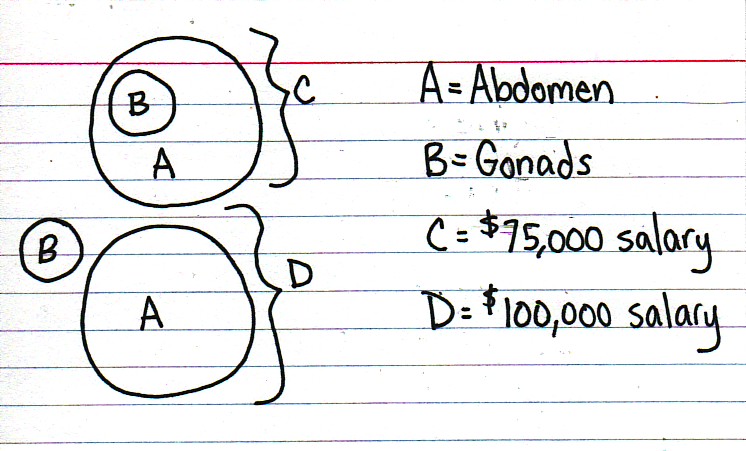
Let me begin this post, by stating the simple fact that I have never been a woman. Perhaps you were aware of this (though if you saw me on Halloween 1999 at this place you may be in some doubt. But no, probably not, even then. I didn't make a very convincing transvestite). Due to the relative location of my gonads I've never experienced how difficult it is to be a woman in a still, I'm afraid, very patriarchal world. So, I don't, unfortunately, know whereof I speak.

That being said, the idea of the Cinderella story has always been a disturbing one to me (and, I think, to many people). Let's take the basic outline of classic Cinderella:

1) Pretty girl is made to do ugly work
2) Deus Ex Machina reveals the true worth of the 'servant girl' (that is, she's totally hot, and nice and quiet. In the Disney version she can sing too, which I suppose is at least a talent)
3) Jealous women in girl's life try to hold her down
4) Girl identifies herself by dint of her helplessly dainty feet
5) Man saves girl, takes her to a castle to take care of her and buy her pretty dresses in exchange for marital duties. I mean... he falls in love, yeah.

This isn't exactly a Gloria Steinem bedtime story, is it? The heroic journey of Cinderella (and it does more or less follow the Campbell hero cycle) is basically a quest to learn how to be decorative. That sounds more like a parody, almost.

And really, in a lot of ways, I can see how Ms Golightly is that way, I won't deny that part of the appeal of the story is the same appeal that Cinderella has: a general bias towards pretty, harmless things. Everyone around Holly treats her like an object, and in the end, when Fred/Paul gives his speech, it's not about respect, it's about ownership:

"People do fall in love, people do belong to each other, because that's the only chance that anybody's got for real happiness. You call yourself a free spirit, a wild thing and you're terrified someone's going to stick you in a cage. Well baby, you're already in that cage, you built it yourself..."
That's not an empowering speech: it's a speech that tells Cinderella that, in the end, she needs the prince.

But is that all that it says?

There are a lot of stories, now, that talk about objectification as an empowering thing, at times. How many 'girl power' type stories have the heroine defiantly go out shoe shopping with her friends after getting dumped? And defiant is usually just the word, as if buying sexy shoes was a way of showing the lost man that she is more than he would make her be. On the more 'literary' end of the spectrum, you see the same behaviour. Take this passage from 'A Handmaid's Tale':
The one with the mustache opens the small pedestrian gate for us... As we walk away, I know they're watching, these two men who aren't yet permitted to touch women. They touch with their eyes instead and I move my hips a little, feeling the full read skirt sway around me. It's like thumbing your nose from behind a fence... and I'm ashamed of myself for doing it because none of this is the fault of these men, they're too young.

Then, I find I'm not ashamed after all. I enjoye the power; power of a dog bone, passive but there. I hope they get hard at the sight of us...
Again, the woman here is defiant, in that she seizes her RIGHT to be an object, if she wants to, that she seizes the power and freedom of objectifying herself.

Sex, of course, is the easiest way to show this objectification, and arguably the most common way to make an object of one's self, but not the only one. In a sense, it is the same freedom that makes the horse in animal farm a hero, the freedom to be both more and less than human, when one wishes. It's the freedom of the nun, who renounces the world, and becomes seperate, different, something not quite the same as a woman - and most vitally, in a sense becomes something to many people, rather than someone. There is a power in being something, a very real and very beautiful power, in passivity, the power of renunciation, of knowing that one could have something that they choose not to have.

How does this relate to Miss Golightly? Well, there is an essential difference between Cinderella and Holly Golightly - Holly doesn't let herself win. Where Cinderella would have risen to be a movie star (the closest American's can be to a princess without marrying a Kennedy), Holly abandons OJ Berman to become what is, more or less, a glorified call girl. The glass slipper slips onto her foot, and she walks away. And in the end, when she leaps from the magic pumpkin, there is two interesting things to note: first, that she chooses to pursue the prince who has left her rather than waiting for him to save her, and second, she actually goes to look for Cat, not Fred. In fact, this brings up an interesting part of the story: Holly, in being objectified, does not sublimate (Cinderella in the end becomes a part of the prince, rather than her own person), but rather transforms the entire world into a world of objects, a world where Cat is just an anonymous cat, Paul is forced into the role of Fred, men are just rats, super-rats, or scared little mice, etc. 

But this still doesn't answer the niggling question at the end of the movie: if the world is made of objects, if Paul/Fred is an object, and Holly herself is an object, why does it matter to an object whether or not it is owned?

I don't know, I'll admit that right now. But here's the best answer I can come up with.

See, the thing is, objectification isn't the problem - enslavement is the problem. The problem with men looking at women as nothing more than a collection of feelable, ogleable parts is that men then view women as things to manipulated, used, collected, discarded. Empowering objectification is one in which the object maintains it's own autonomy - like I said, it is not to make oneself inert, but to make oneself simultaneously more and less than human. A God is both more or less than human (or, a Goddess), and in many ways this is what you see in objectification, a consignment of oneself into an archetype - Holly, for instance, refuses to be a sex object, and instead chooses to become Venus - the sex Goddess with all her weaknesses and strengths. The classical nun, in many ways, refused to become the wife-object of a man, and chose to become the divine consort, the Virgin Mary as it were - a role with power for her.

Are these objectification healthy? Like meat and sunshine, the answer involves complex questions of individual needs, and a demand for moderation. I will say that it is, for both men AND women, necessary for survival in a hostile world (tell me, for instance, if you think that Walter in Rilla of Ingleside objectifies himself into Athena, the goddess of just war, any less than Holly objectifies herself into Venus?). It's a messy, ugly, destructive thing, but it's also a purifying, simplifying, and beautiful thing - WHEN it is empowering, instead of belittling, when it is willed instead of forced.

Now, I do want to say, that I don't think it's possible for such objectification NOT to be somewhat sexist and degenerative in our current society - after all, Paul's role as the whore of his 'decorator' doesn't make HIM Venus in any way, and it should. I'm not advocating more books about pretty girls winning because they look harmless. But, I suppose, I'm saying that the question is also too complex for us to be dogmatic.

Read More......