3.12.2015

On the Death of Terry Pratchett

Sometimes,

They tell you little stories,
  When the good ones die,
Sometimes they're even sweet, or bittersweet,
  But in the end, they are currents in the river.

And, a current is kindly, after all:
  Its a medium for carrying on.
A current could rush you from the rotten moorings
  Could tumble you through the bramble on the banks.

Sometimes,

They roll out anecdotes,
  When the good ones die,
Sometimes they're even wise, or funny,
  But in the end, they are wind on the stream.

And, a wind is kindly, after all:
  It fills the sail and tugs it gently forward.
A wind could carry you over the murky bits,
  Could rush you into the free and open sea.

Sometimes.

But only if you've already a ship,
  And the ship is sound.
And when the good ones die,
  Your ship sails off without you,
And sometimes, after all,
  You need to stand just so,
And feel the aching chill
  Of a still pool,
And not, - just yet - rush forward,

Sometimes.

(Terry Pratchett died today. I did not know him, or his work, really, but I've been listening, and watching some of my friends who loved him dearly. The best to you all, friends)

Read More......

4.29.2014

Nymph, Sylph, Mirror-glass


The water suspends,
As warm as a womb,
It whispers currents,
From the bloom of my own
Languor.

The air, she lays the steam
So soft and slow against the mirror-glass,
So soft and slow like mother lays
Her child in the bassinet.

Then, unburdened,
And left fresh-skirted and alive with chill,
She kisses me in the lover's nook -
The crook of the neck.

Her tease is tender:
She is right.
Its time that I got up.

My eyes wander to the mirror,
But the steam lays across,
So I, still and humid,
Am a ghost-in-the-glass.

Too tall, perhaps?
Yes, that.
The spectre, it is foreign --

But perhaps a strange and elder sister of myself
Looks back through a glass darkly.
And when I nod to her,
She nods back.

Cold, heartfelt, compassionate.

And this gentility,
Perhaps,
It is enough.

(image courtesy of nutmeg designs)

Read More......

2.09.2014

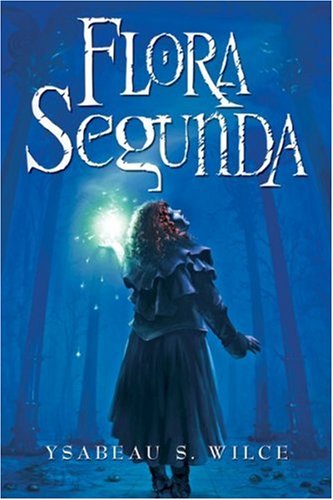
Book Review - Flora Segunda

It has been awfully long time since this blog had a book review, but then its been an awfully long time since this blog had writing often at all, and one must have words, mustn't one, eventually? At least this one.

Flora Segunda was publish in 2007, and given that there are many blogs covering YA that are wonderful and very authoritative (far more than this blogger, who reads YA the way that a walrus must eat beef - awfully rarely and with pleasant and recurring surprise that such a thing exists), the fact that the title has not come up before was a bit stunning, because its a beautiful book, that has only been more present emotionally since the reading of it. Perhaps, in part it's that simply it's been a very long time since simply reading a book. There has been squeezing in some in the corners, but not really reading, not REALLY reading in an awfully long time, and January was not the most delightful of months, so this was a wonderful book to have as a friend.

Flora, if you, gentle reader, have never heard of it either, is a book about a young girl, the heir to an old great family of the land of Calif, who is approaching the date of her Catorcena. Perhaps gentle reader you are already clever enough to have spotted something that I am boggled to say it took me about a quarter of the book to recognize - that the book is set in a fantastical version of Southern California. This was one of the great charms of the book for me, that the flavor of the magic and world building is wonderfully different from others I've read - the enemy kingdom is based around Aztec and Maya culture, the wizards are, in many ways, sort of a cross between Zorro and a gallivanting 19th century cavalry officer, though both genders (if that whets your appetite, I positively demand you read this book, and then make long emails back and forth with me and we shall make up grand stories about the inheritors of Nini Mo's ranger legacy).

The tone of this book, even apart from the setting and feel of a young magical California, is unique, I literally cannot think of another book to compare it to. At first I was concerned I would not enjoy it. With the first few sentences there was a mention of the word 'potty' in a humorous setting - in the end though, what the book did was make me realize why I DON'T usually like 'low' humor in a book aimed at children: because usually it feels like an adult condescending to the child, going 'well, I know you're too stupid to get subtler humor, so I'll throw a fart in here.' Only, the thing is, when you're thirteen (catorcena is your fourteenth birthday, a playful and clever life of the quinceanera tradition common in the parts of the US that are influenced by Mexican-American culture, which if you're not familiar with it, I recommend a google image search), well, frankly for most of us a bit of that humor IS a PART of our sense of humor. I know, I have a thirteen year old, now, and I was one once, a long time ago.

What was wonderful about this book was that the little bits of the lowbrow that came out were simply... human. Simply believable parts of the way this very human girl thinks. This came as a wonderful revelation to me, to where I could enjoy her, the same way I enjoy my own sons. Flora came across as precocious, but attractively, believably precocious instead of simply being an adult in the clothes of a child. Those parts of my heart that are pre-adolescent sympathized with her. And, this made the process of her growing up in the book - for its very much a bildungsroman in all the best ways - much more poignant and familiar and honest. In a sense watching her grow reminded me of the boys growing up in 'Finding Neverland', another book with a very wise command of what the difference between adulthood and childhood, the relative strengths and weaknesses of both.

And that was what really made the book something I will remember - the book so honestly and sympathetically observes growing up ( a process, after all, that isn't something one succeeds or fails at, so much as just happens to do whether one likes it or not, in so many ways), that what in other writer's hands might have been little more than fluff and farce carries a force and poignancy that trickles into the heart and rests there. The books delicacy of touch grants the reader, perhaps, the right, to be, once again, a child, a right that we as adults, so seldom are given access to. My oldest son read it too, and I wish now I'd read it at his age, because I'd love to understand the difference in the way I might have felt it back then.

The mind boggling thing about the book is that, with all the deftness and sympathy and gentleness, how much serious ground the book truly does cover. Living with mental illness, the traumatic effects of war, the dark power of patriotism, racism, and so much of the disillusioning sorrow of late childhood. At the end of the book, absolutely none in Flora's life, no matter how well-meaning, really seems to be terribly virtuous, or even really fully capable of loving Flora completely, in the way that a child needs to be loved, completely, by someone. There is, in the end, absolutely none entirely trustworthy in her life by the final page. But the beauty of it is that, this doesn't make it a tragedy - it simply smiles gently at you and says 'You see? That's what you'll learn when you grow up,' and then proceeds to delicately guide you into loving every one of those deficient, imperfect, untrustworthy people, in spite of it all.

I could go on - I could write a whole other reverent post about the sheer beauty of the senses in the novel - there are sensations in this novel that I swear Ms Wilce snitched from the inside of my dreams. But the poetry of this novel is so deeply integrated into the power of the plot, that I'd just start repeating myself.

Read More......

2.06.2014

"The God of the Bitter-Black Wood", or, "Seven Glass Eyes"


Once there was a wicked man, who lived far too long, and on his belt was a leather sack, and in the sack were seven glass eyes. And each day he would open his sack, and the eyes would turn and look at him, until one day, they would not look away, and he could no longer live in the city of men. So he left, and went into the empty lands.

And on his belt he had another leather sack, and in this sack were seven berries, bitter-black and dry, with the seeds rattling in the heart of them. But the empty lands were so empty! So he took from the sack the seven berries, bitter-black and dry, and buried them in little mounds, and waited for the rain. The rain took a long time in coming, but he waited, for he had already lived far too long, and he had time. And then the rain came, and the little berries sprouted thickets, bitter-black and thick with thorns.

Then the man went round to the seven bitter-black hedges, and opened up his other sack, and in the nook just above the roots, he nestled, in each hedge a single glass eye. And then he trimmed the low branches, so that the hedge grew high and broad into seven trees, and the gnarled thorns wrapped round themselves into a trunk, and in the wrapping, wrapped around the eyes, and closed them in tight. And the growing took a long time in coming, but he waited, for he had already lived far too long, and he had time.

And then he waited, for the trees to bear their fruits, for the winter was coming on, and the flowers were fallen, and the buds displaced. And the fruit too was slow in coming, but it came, too, rich black-violet, and heady with its own smooth bitterness. And the birds came down and gnawed their beaks against the bitter-black skins, until each thousand-fruit split broad, and in the center of each fruit was a pink and mournful tongue. And all the tongues cried out against the man.

And though the growing had been slow, the song was quick, and the hearing quicker, and a great storm came down, and it tore and fought, and heaved and wept, and buckled and drank, and vomited all that it drank down. And when the storm was gone, the man came out from under a brake of ferns, and six trees lay before him, snapped off at the trunks, just above the ground. And in the jagged stumps, laid clean and clear and watchful, there were six glass eyes. And the man rejoiced and took the eyes, and put them in his leather sack. And the tree that still remained stood quiet in the empty-lands, and said nothing.

But God came down then, and sat by the man and watched him as he tied the sack up tight. And he watched as the man went to the lone remaining tree, and from it plucked seven berries, closed up and shriveled, dry and rattling, and he put them in the other sack. And then, the wicked man, turned and he looked at God, and God was what he always had been - not God, but just the God of the Bitter-Black Wood. And the wicked man reached out his hand, and the God of the Bitter-Black Wood plucked out his glass eye, and set it in the open palm of the wicked man. And the wicked man put the eye in the little leather sack, and turned to walk back toward the city of men.

Read More......

1.23.2014

Exile's Song


Old Mother East Wind,
Blow on down.
Old Mother East Wind,
Blow on down.
Gonna chase my torn boot soles,
As I run from this town. 
Old Mother East Wind,
Blow on down.

Old Mother North Wind,
Hush-a-bye.
Old Mother North Wind,
Hush-a-bye.
Don’t say where I’m goin'
If you can’t tell a lie:
Old Mother North Wind,
Hush-a-bye.

I got nothin’ left now, baby,
But the blues in my sack,
I got nothin’ left now, baby,
Keep your lips on my neck.

Old Mother South Wind,
Dry my Eyes.
Old Mother South Wind,
Dry my Eyes.
Make m fair as a pearl 
For the day I die
Old Mother South Wind,
Dry my Eyes.

Young Lover West Wind,
Hold my hand.
Young Lover West Wind,
Hold my hand.
Ain’t no other true lover 
In the whole damn land,
Young Lover West Wind,
Hold my hand.

I got nothin’ left now, baby,
But the blues in my sack,
I got nothin’ left now, baby,
Cept the dress on my back.
I got nothin’ left now:
Keep your lips on my neck.
Let the cool wind blow over
These scars in my back.

(I made this up this evening and was singing it. No reason to sing it for anyone, so I’ll likely forget the tune, but at least, the words)

Read More......

1.18.2014

Comfort Food

Yes, that is indeed a gigantic Kraft Dinner noodle. Thank you, America
I really, really love Peanut Butter and Jelly sandwiches.

No, you're smiling right now, I know. You're thinking, "Haha, yeah, me too, PBJ's, that's the life."

Stop that.

This is bigger than camaraderie. I love them. Love. Like, the actual emotion. Like, I have an intense, fraught, passionate relationship with peanut butter and jelly sandwiches.

Look at it. Tell me this doesn't look beautiful.
Macaroni and Cheese is another one. I like the cheap Kraft kind even (though I LOVE it when its gussied up). Macaroni and Cheese, I... oh god. If I could  wake tomorrow, and have a thick, gooey PBJ for lunch and be able to play around with throwing different things in macaroni for dinner, every day, for the rest of my life, I would reconsider my ongoing feud with God.

*weeps, like a passionate art student at the Louvre*
Unquestionably, if I were to describe my affection for these two foods, it would be that they are 'comfort foods'.  Neither of these are the haute cuisine dandies that one is supposed to dream about. Macaroni is not my foie gras. It is, in the film by the same name, my ratatouille, precious because it makes me feel small and safe and simple, in a way adulthood does not.

I loved these foods as a child and I certainly took comfort in them. but it was of a different sort. Having a peanut butter sandwich, on the one hand was simply delicious, but in terms of comfort... well, I don't really remember. I remember desiring them when I was upset, or when I wished to be brave. If I were to guess, I vaguely remember them giving me a feeling of the general predictability of the world. Some things, in a child's world, must be anchors, they must not move. My mother must love me and want the best for me. My mind must be dependable. The trees must always stay there, and there must always be a bed that is mine. And peanut butter sandwiches must always taste and feel just so.
You think Mothers always love you? You sad little fool!
It is different now. Now, I now none of those things are altogether true. I live, adulthood tells me, in a world where there are no anchors (where one moors, if you will, at sea).


Everything in life is the possible subject of catastrophic change. Love can end, children can die, trees can fall, or worse, rot in place, and heaven could very well just be the wishful thinking of someone very long ago. The sea batters at the ship of maturity, and you must sail, though your charts are lost and your compass swings wild.

But.

Peanut butter sandwiches are still the same. And when you eat one, for just a moment, you can curl up inside of it and say, "Yes, I know, I must be a grownup now, and it frightens me, and I don't recognize this thing I've become. But... I AM the same person. I still have a little heart that sat at the diamond-cut wood table that mother bought from the gypsies ( I miss that table) and ate a sandwich that tasted just like this. Just precisely like this. And it is a little less hopeless, a little less frightening.

Thanks macaroni.

Read More......

1.02.2014

Running out of Gas

I am the consummate runner-out-of-gas (that is... one who runs out of gas, not, one who runs, who is out of gas, or... one who runs while lacking gas. Or... one who runs to exit some tank of gasoline? Don't you love English?). Oh, chuckledy, you my friend, believe this to be a mere humorous aside, but I assure you - there are souls in this world for whom the gods have given the thorn of gauge blindness. I thank holy things that I, at least am not blind to the speedometer (though my vision for it is not precisely perfect...). I run out all the time.

Karma, oh gentle reader is patient, kind and gentle mother, ever ready to extend us JUST a touch more credit, just a LITTLE more time. Until, she can't anymore, until she must take a debit from someone of her own account, and... its you. So, I respect old Mother Karma enough to not put her in that, I'm sure, very painful position if I can help it (though admittedly, I frequently fail to help it, nonetheless). As such, I TRY to stop when people are on the side of the road. Even without Karma, well, when you've been there stumping up the shoulder of a mid-city interstate between cars going 90 who could really care less if you live or die... you develop a pang of immediate sympathy when you see some other poor soul in the same predicament.

So, today, I exited from the highway - its been a most eventful week in my little, glass ball of a world, anyway, and not entirely one I am completely happy with my behavior in (when I am happy with my behavior, I shall return to the bottom, assuming I have now grown arrogant -- thank the Salvation by Grace Treadmill I understood in my youth, these things never entirely lose their echoes in one's mind). And then old Mother, she saw me exiting, and said, "Oh, well, now here's what I'll do!"

What should do if someone you love inadvertently image searches the words 'devious goddess'


And I found myself waiting at the light behind a suburban. Then... the door opened. And a man... got out. And I confess, my first instinct was the selfish one, wondering how I could pull around. BUT! I did not! For once! I popped my hazards, hopped out, and walked to the man, an African American gentleman approximately my own age with the flushed, defensive face of one who has done something humiliating, but would like to communicate to you forcefully, that he's perhaps not ready to find it funny. So, I just smiled. HE was disconsolately pushing the green suburban, singlehandedly. I had no real idea WHERE he thought he'd push it. I mean... he was at the light. And... its a suburban. They're real-real big. I think it was mostly for show, a way to signal to whoever was irritated being stuck behind him that 'hey, look, I'm trying ok?'

So I asked, "Need a hand, you trying to get it on the shoulder?'

This is the introduction that both parties know is simply a polite ruse. Clearly you need a hand, but simply going and helping without checking feels like an assumption of incompetence. In the given situation, the needy one ALREADY has a very humiliating weight of incompetence. I know. I've run out of gas once at this stop sign, and then I've also gotten in a car accident at this stop sign, that totaled my car while both cars were stopped, and without ever touching the gas pedal, or exceeding five miles per hour. I am a very talented individual.

Holly:  "Do you think she's talented, deeply and importantly talented?"Paul:  "No.  Amusingly and superficially talented, yes.  But deeply and importantly, no."
The man, of course informed me in response, "Mmmffnppp."

To which I smiled and responded 'Ah, I see!' Of course I didn't. I then offered, "Hey I think I have a gas can, in my trunk, let me check!"

At which point I did not wait for answer, though if I HAD I would likely have had the man offer, "No, I don't need a... hell... never mind, I'll tell him when he comes back."

And I DID come back. With no gas can. I hadn't one. So I was sort of embarrassed.

This is both not at ALL the picture I was looking for and yet, somehow, poetically apt.
But he then figured I guess "Well, he's dopey, maybe that at least means he's not a threat."

Oh, you silly fool...

Is this a pony? Are there moustachio-twirling pony villains?
No, actually, he just said, "Hey, would you mind going over and picking up my girlfriend at the gas station across the highway?"

"Sure, no problem!"

"She's got a gas can, she's wearing pink.... she a white girl?" That last part really DID come across as a sort of tentative question mark. I'm not sure if it meant 'is it okay, she's a white girl'? Or, 'Did you get all that'? Or 'don't worry its not a scary black person'? (which kind of makes me sad, that I think that might be what people assume I'd want to be sure of, but I think it wasn't, so I'm assuming the best) or what.

At any rate it wasn't a necessary description any way. Madame Jeuneblanc (sp?) was a white girl, sure. So were most of the people there. She was also carrying a gas can approximately the size of Providence Rhode Island, (I've never been to Providence, but I stand firmly by that statistic) and a sweat suit that I believe may have doubled as a non fuel-consuming pink safety flare. I really expected her to give me the 'Dude, you're a weird dude in a  crappy car pull pulling up to a strange lady and asking her to get in' look. But she was actually quite glad I came, and we crossed the bridge chattering pleasantly, and I dropped her off at the corner. Yay!

"What's your Karma level today?"

WEll. Maybe not OVER 9000. But still. I love people. I hope they had a wonderful afternoon.

Read More......

12.17.2013

Swan Song


This is my swan song,
Oh, my sweetling, whom I have taken to breast,
Whom I have kissed and petted -
This is my swan song.

I have made it sweet for you,
Soothing and soft,
A lullaby tone.
I want you still, to sleep,
And seldom sleep alone.

Do you know? I never met your father -
Though he did try!
A thousand times he came
To introduce himself,
Each time I would step backwards,
And put marbles in my eyes,
Extend prosthetic flesh,
And let the creeping lipsmile come.

But no, my darling,
I will make it sweet for you,
So gentle it will make you smile in your dreams.
I want you still, to sleep,
And seldom sleep alone.

But, you came of it.
You poured forth from me
In a storm of rose,
You fell from me 
In a hail of gobbets.
I vomited you forth,
And we wept together,
The tears of the empty 
And tears of the suddenly full.

And oh, I shiver to remember! 
You were so warm against me.
I was Adamic:
My true love ripped forth and laid beside me.
What is loneliness when 
There are other lonely eyes to look upon?

But no, my darling,
Do not leave, now, I need you to hear,
I will make my song like honey on your tongue,
I want you still, to sleep,
And seldom sleep alone.

This is my swan song,
Oh, my sweetling, whom I have taken to breast,
Whom I have held to the very last breath -
This is my swan song.

Read More......

12.16.2013

Fire-bright

The soul demands constriction --
  The knotted cord
Biting epiphanies into the tender flesh.

Kind-eyed angels holding irons
  Fire-bright --
  From the depths of God's own bosom --
Press close to us---

Teresa did not mention how
The golden dart
Had flickers licking from a slender head.

The spirit is willing.
But the flesh? Perhaps--
Too strong.

Read More......

11.29.2013

Outside

I live in a city, I work on a computer, I am mildly agoraphobic (maybe agoraversic? Is that a word?), and... well, lets be honest: a wee bit lazy. So, very seldom do I get outside much. This is a shame, because I love outside. I love the way everything has a texture you can't quite predict, the way that life ebbs and flows and bubbles and shrinks, the way that everything around you has a name and you don't necessarily know what it is (or at least I, as often as not, don't). But I live a life composed of things-which-must-be-completed (many of which I don't complete). And so if a thing does not have some sort of obligation tied to it - or is an effortless temptation - its unlikely I'll ever do it. No, I'm serious. My to-do list has 'take a shower' written on it. SOMETIMES I manage to check that box. If I forget to write it down? I never do it. Ever. Yes world, look on me with disgust (but perhaps, if I am behind on my list, don't breathe too deeply).

But to the outside world again - the trouble with systems of 'effectiveness' (Mr Covey, for example, or that Tech Darling, Getting Things Done) is that it assumes that what one wishes to do is synonymous with what one wishes to accomplish. Sure, there is the acknowledgement that certain other things should occur, because it is necessary to 'recharge the batteries' or as Mr Covey says, 'sharpen the saw', and perhaps High Gurus of Coveyality will wisely show how one can use a list to be more spontaneous and play Legos with my children (I put playing with my children on my list - again, otherwise I never do it). I am not the guru of anything. I read 'productivity' books with that mixture of hope, discouragement and bitterness with which damned souls read the bible. So! Many! Sins!

And this is how nature is for me. I don't want to accomplish the outside world. I do not want to win nature. I am not in search of the nature prize. IF you asked me what I wanted to get out of going outside, I'm not rightly sure I could tell you. I'm not sure I'd want to be able to.

In fact, what I've learned is that if I DO put it on my list, then I hate it. It becomes a chore, a sort of complex Vitamin D pill that must be swallowed.

Again, I don't mean to imply this is something exclusive to the idea of going outside, I think its more general. Its the same reason I think Liberal Arts is dying - because in the end the point is to give you a context for living in, not to make you more productive. There is no accomplishment involved in these things - like Oscar Wilde's essay on art being useless. But that means, you are left with the question - how to shape the day? How to consciously do that which you wish to desire unconsciously?

Read More......

11.28.2013

On Ghosts

I have a soft spot for ghosts, I always have - even the books about other supernatural creatures I've enjoyed in the past, at their base, are ghosts: Carmilla comes to mind, so do, in a different way, the elves in JRR Tolkien (part of why I didn't enjoy the movie version of Fellowship - the only movie I saw - was that the nature of elves as a tragic, only half-present race felt untapped, but that's a story for another day). When I was young, I remember, in fact, imagining up ghosts, playing with the idea of them (another post for another day).

At the same time, I've seldom enjoyed ghost stories - once in a while (and I would LOVE some good recommendations), but often not, enough that I DON'T say I enjoy ghost stories. This month, ghosts have been on my mind a lot, and so the reason for this has been gnawing at my subconscious.

At heart, the problem with the 'typical' ghost story - and by this, I mean, the kind you hear around campfires, let's say - is that there is so little focus on the ghost. Ghosts are made into a sort of depersonalized spirit of horror, in this type of ghost story - something like another genre of fireside story I dislike, the classic "...and the radio said that a madman had escaped from the local prison..." story. This is fine, I'm not saying I'm morally OPPOSED to this sort of ghost story. Just ghosts feel like a rotten way to tell it, because the spirit of terror is usually terrifying because of its 'otherness' - the best example of this sort of ghost story, then, in my mind, wouldn't be a ghost story at all, but rather something more primordially alien. Say, a Cthulhu story, or maybe something like the film 'Alien'. Science Fiction stories are actually often at their BEST when they force us to confront the idea of a thinking entirely alien to our own, telling us metaphorical stories about the unbridgeable, terrifying gaps between different people's psyches (at least to me). But as ghost stories these fall short for me: because the essential tale of the ghost is of something human. Something human distilled down to its essence, and perhaps therefore losing its humanity - but still. Something human. A vampire story is (at some level, in my mind) about the animal in us and all the damage that can do. Ghosts are about the human in us.

When you hear about people's stories of 'real hauntings' (the validity of said haunting I will not take a position on), there is something to this sense of humanity. La Llorona, a popular story here by the Mexico/US border, is a good example of this - a woman who has murdered her own children and then died in the throes of regret over the act is cursed to walk by the river every night, keening for her lost babies, trying to find them again. There is two elements to this that make it powerful in my mind (and my has no one written a La Llorona novel?):

1) The utter impossibility of death. If vampires are about immortality, in a sense, ghosts are about the impossibility of avoiding death - they are not undead. They're just plain old dead. Echoes of life. Ghosts, in many if not most incarnations, are set on impossible tasks. La Llorona CANNOT find her children. Ever. They are gone. They are dead. She can save them no longer. The Bean-Sidhe of Irish myth will never wash the blood from the clothes she is scrubbing against the rocks - there is no substance left for living water to interact with. The ghost ends up telling us something truly horrible and humbling: that a day will come, when we will die, and when we die, there will be things we will never, ever, ever be able to repair. All souls carry sin, or guilt, or fear, or hate, or love, or any of a thousand other, in the end, unshakable fires, and when you die, these desires, unfulfilled, will end, and never, ever be fulfilled. There is no 'eventually' in death, there is no more hope that you'll hit your break.

2) The reduction of the soul to an organism of regret. As I grow older, this becomes more and more powerful to me, because as I age, my regrets become more hopelessly entangled with my life, and my desires become more desperate. At twenty, the desire to write a book, let us say, feels like something that will occur, but will simply take time and circumstance. At thirty, it feels like a desperate foreboding thing, something that is slowly dissolving. Every year it becomes more and more regret and less and less desire. And the trouble with regret is that the impetus behind them does not change, even as time and capacity disappear. At thirty, I can already see how much of my mind is consumed by moments that I would change, or that I would, just, understand. I can imagine, by sixty or seventy, my consciousness being gorged with this feeling. It reminds me of the poem by Emily Dickinson:

WHILE I was fearing it, it came,
  But came with less of fear,
Because that fearing it so long
  Had almost made it dear.
There is a fitting a dismay,
  A fitting a despair.
’T is harder knowing it is due,
  Than knowing it is here.
In a sense, no matter how optimistic we are, if we have things we want to do, marks we want to make, virtues we want to espouse, life becomes a race where we try to run backwards, but can only move forwards. In the end? I can imagine it almost sliding out without noticing, the mind so fixated on the impossible - that was, after all, no more possible, before the moment of the candle-snuffing - forever repeating itself. The events of some great regret replaying endlessly, when the body is no longer present to camouflage the psyche. This is what a ghost is, to me - the whole concept of unfinished business speaks to an essential sickness in the human psyche, a sickness we might call Narrative, or Hope (it perches in the soul, and it perches with, sometimes, very, very sharp claws), a divine, beautiful sickness that leaves those who become ghosts with the worst sort of infection - eternity. 

Ghosts are strange in this way. A story about a ghost, unless it be a story of a human intervening on the ghost's behalf, is a tragic, hopeless story. 

Unless. 

A human DOES intervene. But what does this mean after all, to intervene? This isn't like, say, falling in love with a vampire (common as that trope is). A vampire lives (or unlives?) and has directions, hopes, desires. Living emotions. These can be fulfilled of themselves, because the vampire is NOT dead - they have died but are not dead. A ghost is different - ghost doesn't have desires, they have regrets. Regrets can be transformed into desires only by being taken up by the living. And so a ghost story is, in a sense, the story of a human taking on the identity of the dead - of, at least in a metaphorical (and sometimes literal) sense, being possessed by the dead. 

The Sixth Sense is a perfect example - the child in it has NO desire to slip into the house of someone else and watch video tapes of them being poisoned by their mother with lysol. None whatsoever. That is, in a sense, of his own psyche, frankly the OPPOSITE of his desire. HE wants out, he wants peace, a normal childhood, an end to trauma. Instead, he has to go and take onto himself, the pain of someone ELSE's trauma - someone who has haunted their trauma into him. Resolution doesn't fix him, it only fixes the ghost - the ghost can pass on, presumably, but he is left to live, an eight year old who know has to grapple, alone and in secret, with the fact that mothers poison their own children, and that he may, at any time, be forced to bear witness to the fact. Or other facts, facts he can't even imagine. So, no, he is not literally taken over by the spirit of the dead, the way that, say, Whoopi Goldberg is in 'Ghost'. But, he is fully, entirely possessed by that spirit, forever, he bears its pain on his psyche long after ghost's psyche has been relieved of it.

Now, think that one step further - what happens when he dies? What if he becomes a ghost? How is he going to relieve that ache? The trauma does not disappear, even though the means of resolution have been fulfilled. Or, what if he meets a ghost whose trauma CAN'T be relieved? What if the poisoned girl did NOT have a videotape under her bed? Or her father refused to believe it? The spirit has nothing left but regret, regret that can never, ever be alleviated now. She doesn't really even have the choice to be compassionate anymore, because all she has left is the desire to have someone fix this for her. So what will she do? Sit there and haunt the boy. Forever. Willis, in the end, does not give the boy a solution at all, and the ending has more or less no hope in it at all. Its like finding a child in a war zone, and giving them a gun - they'll likely be shot anyway, and even if they don't, they'll have the weight of that gun, and any shots it fired, on their conscience if they do, miraculously escape.

I don't know. In a way that other stories can't be,  ghost stories have this startling, terrifying power to talk not about death, per se - I don't, after all, know that there is any sort of persistence after death, and if that persistence is anything like a ghost I hope there is NOT persistence after death - but rather to talk about what death means. The dead should not be alien fears, because in a sense, they are our most intimate, secret fear, the fear of impending mortality, of the inescapability of time. The relative impotence of free will.

Read More......

10.18.2013

The Necessary Self


When I was young, I didn't really get Superman - I still don't, more than likely, to be honest with you. But one thing one notices about Superman, to me rather apparently, as that at root, he is a character we are to wish to emulate. Superman is, it seems to me, the ideal self in the American popular imagination (well, that's not true - perhaps it is simply the ideal man? I'd love to, as an aside, hear what the impression women had of the character in their exposure to him). He's strong, he's invulnerable, he is noble, he is attractive, etc. He's also an outsider, an immigrant (more or less - does interstellar space count as immigration?), an individualist, an, if you will, entrepreneurial hero - a believer in individual hard work, I suppose.

Well, I  came across this comic via twitter earlier this evening, and it made me consider, what does that mean? To be an ideal hero. I have an interest in this, because once upon a time, I thought I should like to write an epic poem, and epic is, naturally, attracted to the heroic. What always struck and bothered me was that, at some level, I never really believed the heroes of the great epics. Odysseus, Aeneas, Achilles - I never could quite believe the author was trying to draw an image of a real person. Superman? The same way. Batman (in his more modern incarnations) perhaps is somewhat different, he's supposed to have an internal psychology. Superman, in the incarnations I know him (and understand, I'm no comic books expert, I know there were some angsty Supermen out there at one time) is not human. He's an image of a man.

This bothers me, it troubles me. Because, you could not WRITE Superman as a real person. Oh, you could write a real person with superpowers, you could write other stories. But he wouldn't be Superman anymore. Superman can't JUST be someone who leaps tall buildings or what not. He also, in order to truly be what I'd consider Superman, stands for Truth, Justice, and the American Way. Not like... he has to put a show on for TJ&AW, or do his best to approach it. He is meant to TYPIFY it. Putting Superman in a situation is less a story than a sort of physics experiment, with the impossibly pure variables that high school physics always presents. This is the difference, to me, between a Superman and a Batman (or even Spiderman, say) - when you ask me what would Batman do if he had to choose between saving a bus of screaming children, or the woman he loves, I think "Well, what is Batman like? What would Batman choose?" When you put Superman in the situation, it becomes a simple matter of ethics: "What is the virtuous decision?" Answer that question, and you know, that's what Superman would do (but then, that's a thorny question, I understand). The rest is just logistics.

At first glance, this limits Superman, perhaps, and this is how I always thought of him - what fun is it to read Superman? He's not human. I can't identify with him. But reading this comic today, got me thinking of all that I could learn from it. Because Superman is the Perfect Man - the Man to Emulate as it were - I can look at a comic book like this, and think:

"What does this say about virtue in our culture?"

Of course, I understand, there are people who would disagree with the comic as presented - culture is a generalization, and we all differentiate from our straitjackets in our own ways. But in general: this comic rang true to me. This is what the movie-ending right thing to do was.We value life, but we value freedom to make our own choices. We value compassion. We value kindness. We value democracy, and just a BIT of anti-establishmentarianism. These are who our heroes are, people like this. Our heroes are NOT John Stuart Mills-like, they do not calculate, they seldom work for the greater good in the abstract (when they do, they often turn evil). They work for the good of the individual, they work, most powerfully, saving one person at a time. Stopping a bomb from going off that will destroy New York, well, that's a MacGuffin, we don't sit there identifying with all the folks that would get blown up. We identify with revenge, or with saving a child, or with redemption, or any of the other human, individual stories that movies are about.

More than this, what is fascinating about this comic is that, in the end, Superman, inhuman, impossible, unapproachable, is all about wish fulfillment. He is superhuman, and this (much like Christ, or Buddha) makes him that-which-we-would-be, you know? And sometimes that's silly. Sometimes its, we wish, perhaps, we had enormous pecs and could look good in spandex, or a good square jaw, or that women swooned, or whatever nonsense.

Sometimes, though, its the utterly impossible and silly situation laid out here. This isn't how it happens in real life. Have you talked to a depressed person? It isn't like this, this is performance art, not mental illness. But, when someone IS depressed, it terrifies those who see them, it's this feeling of utter, complete helplessness. And we want to believe, NEED to believe, 'If I could just talk to her, just me, not all this nonsense the rest of the world is throwing at her, just the two of us. I could change her mind.' There is an arrogance there, but it is the saddest, most human form of arrogance - the arrogance born of desperation and fear. So, Superman, invulnerable, impossibly effective, is less an image of how we think things really are, but instead, a vision of how we wish they would be. If only I had been a bit kinder, a bit wiser, a bit stronger, a bit more steadfast, a bit more loyal.

The truth of course is messier. The truth is, sometimes, there is no strong enough, no wise enough, no kind enough. Sometimes, my apologies to John Lennon, but Love is NOT all you need. We cannot will the world to be right, simply by being our best selves. We can just throw ourselves at the problem, sometimes fail, and usually haunt ourself with that fear: Was I not enough? What if I had been just a little more than I am?

You can't. You can only be what you are. But that's not comforting. That's a pronouncement of doom. Some people perhaps, they can take that philosophically, find the peace of the serenity prayer, often prayed, seldom really attended to. Some people, some people need Superman, some people need to keep trying to be more.

Maybe that's what Superman is. Like Christ, he is the love so great, it inspires self-loathing, the security so great, it pricks our fear, the comfort so great it stirs our guilt. Grace and Works. The queer alchemy of redemption, that says you must be so terribly much, and realize it is never enough, and then it is enough.

Read More......

7.08.2013

Legion


My skin is cast in plaster
And the mold is long since broken.
Limestone induction.
Birth by force of will.
The spirit of the long dead,
Set up to dry on the windowsill.

Your costumer, she found me
In a charnel house,
The bones like yellow bells,
That clicker-clacked against each other,
Form in search of shell,
A heart as well, 
She dug 
From underneath the soil
That still clings beneath her nails -
Heart of someone,
She would not say who,
A cast off costume from
Some long forgotten show.

She formed this plaster flesh,
And carved the sigil in
My forehead's plaster skin, 
And whispered in my ear
The only honest word:
The secret name of God.

She swept the floors all still and clean.
She did her best.
This monster-mass of living flesh 
Among a forest of 
Automatons.
For I am Legion,
Cast into the swine,
The swine then trained to stand
Upon hind legs
And speak the tongue of man.

Lord do not keep me here
On cloven, trembling feet.
Oh gods! Release me!
Let me run the grassy grade
To drown my self
At last in the salt-sick sea!

(Image by Javier Flores)

Read More......
7.06.2013

Showers


I stand beneath the angry steam,
Unhinged from all my armors.
As empty as a scoured kettle.
As solemn as a clapperless bell.

My hands, my rough, hairy-knuckled hands:
How could I have expected more?
You darling monsters,
You have done all that you could.
My face, a pimple stuck with crusted ooze,
Oh, face,
You were the best that you could manage.

Imperfection is a spectrum,
I have learned.

All things possess their faults,
They say - this is not quite true.
Some of us, weak specimens,
Are rather by our faults possessed.
The ghost of error tickling up our spine
Directing us,
Benevolently sure that it knows best.

The water runs,
Spittle from old pipes of verdigris.
The water runs and licks the dust and tatters,
Leaves behind, insoluble,
The sticky grease of sin.

(Image by Jerry Bowley)

Read More......

7.05.2013

For the Young Blades


Heavy-lidded, aren't we, 
My Friday morning damsels?

The young blades canter past
The dark window of a once-apothecary,
Eerie shadows of a hazy red bulb 
Cast upon the Asphodels of skin.

My arms are a pornography,
Oh so ever pure, and slender smooth,
My face rests on a strumpet's neck,
That begs for fingers, implements:

There is nothing so delectable
As virgin flesh. 

Yes darling one, put on a subtle pout,
Yes little bitch, half-close those bedroom eyes.
Whicker those palms like a horses chuckle:

The way my skin shivers -
Taut and plump with my hydration.
Languor running,
Manicured,
A single finger up and down
The muscle that embraces
My vulnerable throat.

The young blades canter past
The dark window, of a once-apothecary,
Eerie shadows of a hazy red bulb 
Cast upon the Asphodels of skin.

(Image by Anderson's All-Purpose)

Read More......

6.18.2013

Love Song From Time to Space

We two shall Sisters be:
You shall be space, and I shall be time.

Space can exist alone, my love,
Tableau is  a beauty of its own.
But what is time without space?
What is a second, a minute, an hour?
What is a year? An eon?

I am the beast of the empty page,
Who yearns to write you
O'er its thirsty breast.
And I will change tableau to tale.

And as with all space
Once you accept continuum with time,
My love,
I shall one day
Bring unto you
Death.

Sweet tableau,
Push away my insubstantial hands.
Sweet tableau,
Push away my insubstantial hands.
My fingertips may plead to lace with yours,
But listen to my lips:
Push away my insubstantial hands.

(Image from G-Rome)

Read More......

1.31.2013

War and Peace 1 - Don't Try to Remember Everyone


(Miss Amy, you asked for a logo, if this one will help, you're welcome to it)

When I was a senior in high school, I first read Anna Karenina. Alongside Les Miserables, and Grapes of Wrath, the book literally changed my life - it was from that year that I learned how I felt about other people, how to make moral decisions, how to think in terms of the suffering of others. Its where I learned about revolution, and its where I learned about love, and its where I learned about sin, and those three concepts have been defining pillars of the rest of my life.

Loving Anna so much, and because I had that wild hubris of the 17 year old, I figured - why not? I'll read War and Peace.

I. Did. Not. Get. It.

This isn't to say I didn't LIKE it. War and Peace is an experiential book. Its less like hearing a story about St. Petersburg, and more like, suddenly being forced to live in St. Petersburg. That experience - at once impersonal and immersive - was very seductive.

But I didn't get it.

I figured I was too dumb. I probably was. I probably still am, but nonetheless, I learned something I think - I don't know how universal this advice is, really, but I will give it, and any of the other people reading along in this book this year may take it or not take it, as they see fit. Its easy to sum up:

Don't worry about remembering everybody. It doesn't matter.

See, that's the thing I've learned about War and Peace. It isn't about the people. I mean it is. It isn't about SPECIFIC people. You know how in the Odyssey, there'll just be these characters that show up? And once in a while, you feel like, "Wait, seriously? Homer, this is obviously some dude you just made up for the sake of the plot!" And he probably did. Because the Odyssey is all about the journey (and all about Odysseus - in this way its more like Anna K than W&P, but the Iliad most people haven't ever had to read (a shame, 'cause its way better)).

Well, that's kind of how W&P is - it is an epic, and the story is not the story of Prince Volotscherduzhenbatskyariznia - its the story of Russia, and about the War with Napoleon, and about people living through that, about the battle between new absolutism and old absolutism. Its a novel about forces and ideas, not about people.

That makes it sound boring, and it makes it sound like the characters aren't very good. The opposite is true, though, because Tolstoy's whole central philosophy (in my mind) is that history is more than just Great Men moving the rest of us around on the chessboard like pawns. Its the story of a thousand tiny men, a story in which individual heroes are destined to fall eventually, because it is only the People who can do truly great and lasting things. Napoleon is such an ideal character to build this story around, because Napoleon is the epitomization of the Cult of Personality (if you want to read a REALLY good novel that presents this feeling, Read Jeanette Winterson's "The Passion" - its actually an AWESOME companion to War and Peace in a lot of ways). And the story of the Russian People, classically, is the opposite story. The Russians are the long-suffering people, the people who win in spite of their leaders rather than because of them. They're the people that won Stalingrad simply because they kept on living after they had been starved and the Germans didn't. They're the people that first beat Napoleon in spite of having the most incompetent military upper leadership of any European major power of the time arguably (I'm no military historian, so feel free to argue that with me). Britain and France do not tell the story of armies when they talk about Napoleon, they tell the story of Napoleon, and Wellington, and Blucher, and etc, etc, etc. The Russians tell the story of a people and a motherland. It is a victory of the Russian people, and that's how the book reads.

And its not just the war that reads that way either - its the peace too. The cocktail party that starts the whole book (I know, I know, they wouldn't have called it that) is a perfect example. The conversation in the room is not a number of people trying to develop the story of the novel. It is hardly composed of individuals - or if it is, it is composed of individuals int he way your body is composed of individual organs. The party is an organic whole, a single body, that drives and cares for itself as a single organism. And this is how conversation works in War and Peace - yes, it matters who says what, but eventually, you begin to recognize people not as Levyoshtroikan Albumitrovamiravich Horlitzborlityburlington. You recognize them as the White Blood Cell. Or the Pancreas. Or the Liver. In the end its a fascinating way to get to know a literary character, because if you GO to a party where you don't know everyone, you will find yourself (if its a well assembled party) doing the same thing - recognizing the current and vibration of the room, balancing, correcting, intensifying or exuding, as the room requires. Tolstoy does not write shouting parties. He writes parties that make you feel you are a part of something.

Now, again, the individual characters are all so human and so finely penned, that you might come read the book again in a few years, and pay close attention to who is who, learn to play the game of reading the underlying social currents and webs of connections that lie just beneath the surface of every interaction. But, that's the fun of dissecting something you already love. To FALL in love, step back, and just swim in it. Don't try to understand everything. This is a war - wars are supposed to be bewildering. Confusing. Maddening.

Read More......

12.28.2012

Poplar Fruit

My friend Chris at Stuff as Dreams are Made On wrote a post for me the other day answering a question I had for him - so here I am repaying th favor. He asked me if I would write a poem based on a Billie Holliday song, how can anyone resist a prompt like that? If I were a great poet, I would write a whole book of items on Billie songs! Well, I chose an obvious one, I didn't want to pick something obscure, and I remember on NPR hearing an interview with Norah Jones, where she was talking about in high school, one of hr teachers asked her to do a Billie song for a talent show of some sort. She figured shed end up singing something light hearts, I think her example was "What a Little Moonlight Can Do." Instead, er teacher picked Strange Fruit, one of the headiest, darkest songs on Billies repertoire, a song about racism - in particular Lynchings. I remember thinking how hard that would be, singing a song so bitter and angry and personal, about something ones own ancestors might have participated in. So, this week, i wrote "Poplar Fruit." Hope you weren't hoping for a HAPPY poem, Mr. Chris...

My thighs are plump and sturdy,
My face is butter fat,
My belly filled with poplar fruit
My grandfathers planted.

My children are both quick and pure,
Rich with education,
Their fingers stained by poplar fruit
My grandfathers planted.

My heart is sick and heavyset
My heart, she's over fed
With strange fruit hung from poplar trees
My grandfathers planted

I wear a dress of samite silk
Dyed black and white and red,
From flesh burned ash, from bone, from blood
From poplar fruit grown rich and sweet,
From growing on the poplar trees
My grandfathers planted

Read More......

12.22.2012

Happy Anniversary


So, as of this morning (or more accurately, I suppose, as of this afternoon) Amanda and I have been married for 13 years. Thirteen years... that's quite a number of years. The strange thing about anniversaries is that marriage is not a piece of one's identity - in so many ways it becomes the essence of one's identity. It is not something one bolts on, the way one might celebrate, for example, one's work anniversary. It something one transforms into. Its more like a birthday, in its way, and this is one of the reasons I am glad I changed my name when I was married - this is the day I ceased to be Jason Roper, a boy I now hardly remember, and became Jason Gignac, the husband of Amanda.

Like a birthday, though, an anniversary reminds one that the reality of one's existence is an objective fact, that this 'Jason Gignac' character is a person, who exists, who once did not exist who one day will cease to exist again. One steps outside one's self, and looks objectively at one's own story.

It is a peculiar one, Amanda and I. If I were the divine casting director, it is not the roles I would have cast. I'm horribly designed to be the great key to Amanda's happiness, which is always what I've wished to be in a marriage - it's a task that I am awed at the glorious responsibility of trying to fulfill, but that to be perfectly frank, I'm a great bungler at the execution of. But there you have it. When they say love is blind, perhaps this is what it means - there is a mind-boggling aspect to being the man Amanda loves. One continuously wonders, like the Catholic saints of the old days, why one was chosen, when one clearly doesn't deserve it.

And to be frank, this honestly has made me spend many anniversaries just a little bit ashamed, a little bit apologetic. Love has its sharp edges, even on the handle thereof, but it is such a beautiful thing, you feel you have to grab tight to it anyways. It is a hard thing to know that Amanda has made so much of the good for me, when honestly, I'm not even sure I have kept a positive balance in that bank in return. I'd wager not, and if I have, its been more a function of time, since I've made several awfully big negative withdrawals, and still withdraw all of the time. There is a legacy to this one cannot simply release, one cannot (and I think should not) simply say 'well, that's the past'. Responsibility is what it is.

But, then, as I get older, I've learned, perhaps, that on my anniversary, it hardly matters, that in the end, that isn't what one is to look at in an anniversary - there is something about an anniversary, I've come to think, where it is almost selfish to think of it outside of one's self. And those true aspects of what an anniversary is about, I can say wholeheartedly: how much, how dearly, how intently I love Amanda, how deeply, and profoundly grateful I am to have her as the sun I orbit 'round.

How lovely that is, after all - there is something terrific and marvelous about being married to Amanda, to being married to someone you can love and love and love, and never quite find the far borders of. Love is a mystery, right? One cannot understand it - maybe that's the challenge of it, it is the thing which teaches us to be happy whether or not we understand all the ramifications of happiness, to allow happiness to be great for its own sake, not to think of all those adult ideas of 'deserving' and 'balances' and whatnot, but simply to say 'This, all of this, this darling woman, she makes me happy, and she hasn't asked to go, after all, and I love her so desperately, and isn't happiness wonderful?'

Read More......

12.06.2012

Once on Monday


Once on Monday
Twice on Tue,
Thrice for Thursday,
Friday - once.
On Saturday, tis deeper done
So Sunday's rosy rivers run.
Then Monday comes,
And once again,
The kiss against,
The clammy skin.
The children's laughs
Are beet-juice red
And echo 'round
The riverbeds.

Read More......