Showing posts with label pretty things. Show all posts

2.09.2014

Book Review - Flora Segunda
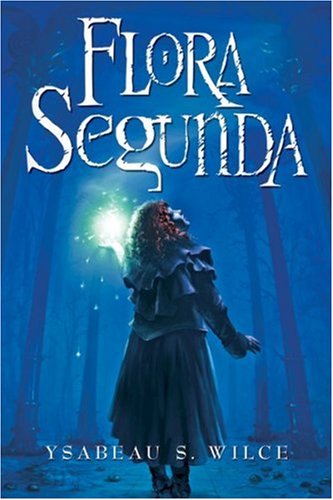
It has been awfully long time since this blog had a book review, but then its been an awfully long time since this blog had writing often at all, and one must have words, mustn't one, eventually? At least this one.

Flora Segunda was publish in 2007, and given that there are many blogs covering YA that are wonderful and very authoritative (far more than this blogger, who reads YA the way that a walrus must eat beef - awfully rarely and with pleasant and recurring surprise that such a thing exists), the fact that the title has not come up before was a bit stunning, because its a beautiful book, that has only been more present emotionally since the reading of it. Perhaps, in part it's that simply it's been a very long time since simply reading a book. There has been squeezing in some in the corners, but not really reading, not REALLY reading in an awfully long time, and January was not the most delightful of months, so this was a wonderful book to have as a friend.

Flora, if you, gentle reader, have never heard of it either, is a book about a young girl, the heir to an old great family of the land of Calif, who is approaching the date of her Catorcena. Perhaps gentle reader you are already clever enough to have spotted something that I am boggled to say it took me about a quarter of the book to recognize - that the book is set in a fantastical version of Southern California. This was one of the great charms of the book for me, that the flavor of the magic and world building is wonderfully different from others I've read - the enemy kingdom is based around Aztec and Maya culture, the wizards are, in many ways, sort of a cross between Zorro and a gallivanting 19th century cavalry officer, though both genders (if that whets your appetite, I positively demand you read this book, and then make long emails back and forth with me and we shall make up grand stories about the inheritors of Nini Mo's ranger legacy).

The tone of this book, even apart from the setting and feel of a young magical California, is unique, I literally cannot think of another book to compare it to. At first I was concerned I would not enjoy it. With the first few sentences there was a mention of the word 'potty' in a humorous setting - in the end though, what the book did was make me realize why I DON'T usually like 'low' humor in a book aimed at children: because usually it feels like an adult condescending to the child, going 'well, I know you're too stupid to get subtler humor, so I'll throw a fart in here.' Only, the thing is, when you're thirteen (catorcena is your fourteenth birthday, a playful and clever life of the quinceanera tradition common in the parts of the US that are influenced by Mexican-American culture, which if you're not familiar with it, I recommend a google image search), well, frankly for most of us a bit of that humor IS a PART of our sense of humor. I know, I have a thirteen year old, now, and I was one once, a long time ago.

What was wonderful about this book was that the little bits of the lowbrow that came out were simply... human. Simply believable parts of the way this very human girl thinks. This came as a wonderful revelation to me, to where I could enjoy her, the same way I enjoy my own sons. Flora came across as precocious, but attractively, believably precocious instead of simply being an adult in the clothes of a child. Those parts of my heart that are pre-adolescent sympathized with her. And, this made the process of her growing up in the book - for its very much a bildungsroman in all the best ways - much more poignant and familiar and honest. In a sense watching her grow reminded me of the boys growing up in 'Finding Neverland', another book with a very wise command of what the difference between adulthood and childhood, the relative strengths and weaknesses of both.

And that was what really made the book something I will remember - the book so honestly and sympathetically observes growing up ( a process, after all, that isn't something one succeeds or fails at, so much as just happens to do whether one likes it or not, in so many ways), that what in other writer's hands might have been little more than fluff and farce carries a force and poignancy that trickles into the heart and rests there. The books delicacy of touch grants the reader, perhaps, the right, to be, once again, a child, a right that we as adults, so seldom are given access to. My oldest son read it too, and I wish now I'd read it at his age, because I'd love to understand the difference in the way I might have felt it back then.

The mind boggling thing about the book is that, with all the deftness and sympathy and gentleness, how much serious ground the book truly does cover. Living with mental illness, the traumatic effects of war, the dark power of patriotism, racism, and so much of the disillusioning sorrow of late childhood. At the end of the book, absolutely none in Flora's life, no matter how well-meaning, really seems to be terribly virtuous, or even really fully capable of loving Flora completely, in the way that a child needs to be loved, completely, by someone. There is, in the end, absolutely none entirely trustworthy in her life by the final page. But the beauty of it is that, this doesn't make it a tragedy - it simply smiles gently at you and says 'You see? That's what you'll learn when you grow up,' and then proceeds to delicately guide you into loving every one of those deficient, imperfect, untrustworthy people, in spite of it all.

I could go on - I could write a whole other reverent post about the sheer beauty of the senses in the novel - there are sensations in this novel that I swear Ms Wilce snitched from the inside of my dreams. But the poetry of this novel is so deeply integrated into the power of the plot, that I'd just start repeating myself.

Read More......

12.03.2012

The Voice Behind the Voice

I suppose it might be a vice, but I think its intoxicating to listen to recordings of poets and writers I already love. This is odd, because I don't like it in reverse - for instance, reading song lyrics that I heard first makes them feel somehow less - maybe I've just never had the right experience, but removing a spoken word to the page feels like translation and reduction. Taking a poem on the other hand, and having the poet read it, feels like a different, entirely separate work of art, particularly if I already know the written work well enough.

I was reminded of this, this week, when I listened to Madeleine L'Engle read an audiobook of "A Wrinkle in Time" (by the way, whichever of my friends knew this existed, and failed to notify me, I'm very disappointed in you (j/k)). When I first read this book as a kid, I believed Ms L'Engle was British, actually - I imagine it was simply that where I lived, people did not have lovely, romantic names that must be spelled with apostrophes, and that are difficult to alphabetize properly. And though I did learn better, this manufactured voice is what I heard the book read in, pretty much my whole life. Listening to Ms L'Engle changed this entirely, for me, made m understand the book in a slightly lisping, cranny-filled Northeast accent in a way that made the book even more beautiful than it had been.

It also reminded me of two New Yorkers I've heard the voice of: Jack Kerouac and Walt Whitman. Walt Whitman, who was recorded so early we're lucky to have him at all, positively shocked me the first time I heard it - his poetry is all fire and boldness, and I pictured it being read like a sermon, the way that Dylan Thomas (hilariously, to me) reads his poetry (no, seriously, listen to him read, its like the 'Death Comes Unexpectedly' scene from Pollyanna, and was WITHOUT A DOUBT imitated (poorly) by me in the golden days of Death and Baby Death if you've wondered). Mr. Whitman, though, first of all has an accent that we tend to resere now for movie characters (the closest analog in terms of dialect in my mind is the masterfully researched performance of Daniel Day Lewis as Bill the Butcher in Gangs of New York (warning for content on that one - I'm just saying it was well researched, I've never been able to stomach the film well enough to tell if I like it). Only, instead of the accent being in a continuous snarl, You hear this strain of almost fragile love through everything - all that poetry about the wide, expansive united states, poetry we often asscoiate with empty fields and rural imagery (also his voice, and a strange, strange commercial on top of it all) suddenly compressed into a little garret anda drinking hall in Greenwich.

In other poets one hears something else - Plath and Woolf and Sexton are all recorded reading their work, and each one, in my mind has this edge of something almost like hatred in thier tone, almost like they are daring you to listen, the cycnic trying to hope. Sylvia Plath recordings keep me awake at night.  Or in a James Joyce recording, one hears how fully he inhabits what he's writing, how much his writing really was simply a voice in his many-voiced head. Or with Yeats, you hear his fragility, his tottering air of almost continuous shock at the world he's in.

Anyway, it's December, and I thought about these all this morning, and I thought I would collect links to listen, in case you've never heard them. If you know any other revealingly recorded poets and writers, I'd love to hear about them.

Madeleine L'Engle reads from "A Wrinkle in Time"

Sylvia Plath reads "Lady Lazarus" or "Daddy"

Virginia Woolf reads an essay entitled "Craftsmanship"

Anne Sexton reads "The Truth the Dead Know"

Dylan Thomas reads "And Death Shall Have No Dominion"

Jack Kerouac reads "Charlie Parker"

WB Yeats reads "The Lake of Inisfree"

James Joyce reads from "Finnegan's Wake"

Walt Whitman reads "America"

Read More......

4.08.2012

Other-Help

So many of my favorite people in the book blogging world - Ms Amy, Ms Nymeth, and Ms Debi, for example, and others as well, some more qquietly, some more subtly - have made comments lately that pointed at a feeling as if they are not contributing enough to the world, that they wonder if what they do 'matters', somehow. And then, somewhere else today I saw something that talked about the 'self-help' industry, and I thought about that feeling. Its one I'm pretty familiar with myself.

So, here's the question. The point of self-help is to help us accomplish our goals, right? Self-help is all about helping us lose weight, helping us get ourselves closer to our idea of the divine, helping us make ourselves happier, helping us understand ourselves, to learn to do great things. I don't say this to denigrate these ideas. I am in favor of great things. Great things are great.

But, the people I've loved most in my life have often never done great things, because often enough they were not helping themselves. They were helping others. And helping others is a very difficult thing. While there are plenty of places to do it, there are few that tell you how. And its tremendously dangerous - I've hurt more than one person I've tried to help in my life. And, in its best form, at the end, you yourself have accomplished nothing. But the people who have this skill, to me, are my favorites.

Statistics, achievement, fame, and 'success' do not, ever, effectively measure how much we help other people's greatness, they can only hint at our own achievements. To all my favorite people, I want you to know, that you are greater than you think, greater than anyone can possibly explain to you, greater than you will ever be awarded for, greater than any of the rest of us deserve.  The greatest of the great are measured by the greatness that others around them achieve. So many of my favorite people speak often about how much they love and admire their own friends, how they are often amazed by how much their friends achieve, by the amazing things they do, by the marvels they create. If you know people that you love and admire, and they seem to be better, more beautiful, more loveable, every year, perhaps, friends, you are a bit to blame for that.

Read More......

10.01.2011

Young ≠ Lazy, Selfish, and Stupid

If you haven't heard about the recent Occupy Wall Street movement in New York, I hope you look it up. Is it likely to fail? Sure, probably. But, just as a measure of people's spontaneous desire to try at things, its a wonderful, wonderful thing, all these young college students sitting on the sidewalks days after day, all these people finding ways to get space heaters and hot meals to them. (Note, by the way, I know there are people older than college age participating in this too - good on 'em. This isn't meant to marginalize what they're doing either).


Which made the reaction of New York Mayor Bloomberg particularly interesting to me:


We need the banks, if the banks don’t go out and make loans we will not come out of our economy problems, we will not have jobs. And so anything we can do to responsibly help the banks do that, encourage them to do that is waht we need. I think we spend much too much time worrying about how we got into problems as to how we go forward. [...] Also we always tend to blame the wrong people. We blame the banks. They were part of it, but so were Freddie Mac and Fannie Mae and Congress.


I see what Bloomberg is saying, I will not naively say that our entire current financial woes are the result of the Machiavellian schemings of a couple of rich men in pinstripes. The current economic crisis is a systemic problem.


What's more interesting to me was that he said there is one solution to our current problems: the banks need to make big profits, so that they're willing to go out and make loans, and that will make reinvestment and growth opportunities, and get people jobs. This is, I will not argue, one way out of our current crisis (I WOULD argue that it's not necessarily the most sustainable one - banks have been growing in profitability for the last 30 years in a  way that sure isn't directly making the average real wealth level of middle and lower class America any higher). What was interesting to me was the assumption inherent in his description, that these protesters were making a stupid, knee-jerk reaction, out of anger and ignorance: "Ah, if only you understood the banking sector as much as I do, kids, then you'd see that you're being childish."


Any time, I think, when you refute someone's opinion with the assumption that they're simply too stupid to know as much as you, there's a fair chance that you're either actively trying to marginalize them, or that you're passively assuming they are less competent than you in some ways.


I see this all the time with young people. I've recently become a manager at work, and have attended a few management training classes, a group in which I was on the lower half of the age spectrum in the group. Probably pretty close to the bottom. One of the points someone brought up in the class was that you just had to work harder to manage the current generation. To paraphrase what he said, kids today are so mollycoddled and spoiled, that they don't understand how to function in an eight hour job, aren't capable of stopping playing long enough to work, don't have the attention span to finish difficult tasks, and haven't been taught to take risks and try new things. Heads bobbed nearly universally. The MySpace generation (yes, their words, not mine) simply hasn't been taught how to be functioning members of society.


Today, Amanda and I went to a book festival, and besides being a wee bit overstimulated (thank you, notebook and a pen, how often you have saved me from loud, busy rooms), I was absolutely plucked in the heartstrings, seeing so many teenagers in one place, again. As you get older, the world repeatedly inundates you with the idea that teenagers are lazy, teenagers are brats, teenagers are selfish, teenagers are know-it-alls. A group of perhaps fifty 12-16 year olds came out at the beginning, in homemade costumes, strung through a crowd with no rehearsal in the hall they performed in, and did a remake of Michael Jackson's "Thriller", choreographed. The whole, painfully long song. I personally am not a Michael Jackson fan, but their choreography? Great, well-practiced, energetic and fun, and filled with sparkling, individual personality. This wasn't the dancing of a bunch of kids quietly obeying the instructions of a wise older teacher who shows them precisely how to move - it was kids who took a framework, and made it their own, every kid a little different, while all still keeping the synchronicity that makes choreography what it is. Lazy, imaginationless drones with no focus? Unwilling to take risks? How can people even say that?


I know, this is something every generation goes through, the process of deciding the next generation down is a lot of worthless heathens who will throw the world away, but dammit, this is my generation, and I don't want it badmouthing, say, my sister's generation, just because it can't quite put its finger on how it works. 


And that's what I don't get about Bloomberg. See, his whole thesis is basically this: "Look, kids, when there's a crisis, the banks take a while to get comfortable, and then start returning everything to the status quo, and that's how crises end." He forgets that what he's REALLY saying is 'That's how crises HAVE ended BEFORE.' That's a valid direction to look. Heck the young generation itself, these days, is harking back to the 'Keep Calm and Carry On' posters of World War II Britain. 


But you can't just assume that revolution has nothing to tell you, just because it will make your life a bit easier and tidier if we just do things how they've always been done. The social cohesion, the energy, the heterogeny, the beauty and spirit, and inexperienced fervor that is youth, there's a reason that we have these things. They have a value that isn't one that needs to be condescended to, its one that, sometimes, has to condescend to us, just to get to our tired, stuck little brains, and say, "Wake up! The world can, if you let it, be something else!" In a time when our problems are paralyzing us with fear - terrorism, disasters, environmental decay, poverty and economic change, employment shifts, you name it - isn't that kind of courageous optimism at least more useful than a drudging terror of doing things differently than they've always been done?

Read More......

6.21.2011

The Death of Emily Dickinson

When Emily Dickinson fell into her final illness (Bright's Disease and its complicatons, most scholars think), she spent it in her tiny bed, in her tiny room, a few feet from the desk where she'd say and copied her poems, and pinned them into fascicles and stuffed the drawers with them. There isn't even, really, a day when you can see her illness began. Practical science,  in its current form, has an aversion to the boundless or the gradual. It wishes disease to fit into lab reports. Disease is not always like that - it can bea slow melting towards where death is in its most natural form, more like falling slowly to sleep than being knocked unconscious. There is the period of settling, the period of pondering, going over the day's events, then that strange dreamy half-state where you are half tethered to consciousness, and the tide of it pulls gently, gently, outward into sleep.

Emily had been to a few doctors, over the years. Her eyesight had been failing for a long time, and in fact, she'd been at some risk of going blind earlier in her life, and had had to make an uncomfortable, unsettling trip to the city to stay at a relative's while being treated by an oculist. But, by now, medicine had had its day. She was nursed by her sister, Lavinia. She wrote letter to friends. She slept a great deal. She felt awful. She almost certainly cried, though the record of this sort of thing is understandably scanty, kidney diseases aren't pleasant. She messed her sheets, she sweat a lot, suffered through fevers. And then, one day, in the Spring, she died.

It was in May. Emily loved the springtime, and in Massachussets, May is the crown of spring (though, to be fair, Emily's poetry shows a playful, familiar affection for March). It was warm enough, by then, that the windows would have been opened off and on, probably even more than normal to air the sick room. She would have smelled the dusty florals of the hawthorn hedge at the edge of her property, she would have smelled the rich balsam-pine smells of the trees next door, where her life-long best friend and sister-in-law lived, no doubt anxious to hear the news of her. Its a wet month, there, she may have smelled the rain. She probably, by then, was not seeing a great deal at all. Perhaps the robins came for her, as she'd written about before.

She was dressed in her own bedroom, and a white coffin was brought in to lie her in, set likely on sawhorses downstairs, in the hall. The Dickinson's gardeners, Irish I believe, would likely have been the ones to come and nail it shut.  They took it to the library, where they had a short funeral. Her long-time correspondent, Thomas Wentworth Higginson, read a poem by a different Emily: Emily Bronte. Of all those in the room, it is ironically possible that he knew her the least. Her sister-in-law wrote an obituary, that mentioned her legendary skills as a gardener.

She specifically asked that the servants, with whom she had a close, personal relationship, carry her out the back door. They crossed a meadow. The grass in it would have been high by then, flecked with wildflowers, particularly buttercups. She lay in the box, her eyes set shut, her hands gently cradling flowers she had carefully requested before her death: heliotrope, lady's slipper, wild wood violets. The scent of the heliotrope, thick and vanilla probably slipped out the interstices of the wood. The grass would have swished against the walls, the buttercups tumbled pollen onto the wood. When they arrive at her plot, the pallbearers would have had the late leftovers, perhaps, of damp about their boots and trousers.

And that was that, they lowered her down, they dropped sod into the hole, and Emily's tiny limbs and white dress would, slowly, slowly begin to dissolve into the earth. I like to believe that someone sang over her. Perhaps it was just the birds.

Read More......

12.20.2009

Happy 10th Anniversary

Perhaps you've noticed I kind of started to streeeeeeeeeetch out my description of my images on the front page. This is because I wanted to save my 'favorite person' button for today, the tenth anniversary of the greatest mistake of Amanda's life (that would her marrying me :P. It's for the best, though. Can you imagine if she'd married, say, Vladimir Nabokov? Between the two of them, they'd of given birth to evil supergeniuses, and you all know we don't want that! Someone had to temper the gene pool... ;) ).

I've never been good at public describing my wife. It's a difficult task, she's difficult to describe. So, I'm not going to do it. Instead, let me tell you a story.

I grew up in a Mormon household, and in the Mormon faith, you are baptized when you turn eight. This isn't automatic - the church teaches that by eight one is accountable for one's actions, hence this being the age of baptism. As such, you have to go meet with the Bishop, and they speak to you, and ask you if you believe in Christ, if you believe in certain core tenets of the church, if you are ready to be baptized. It's something like what Catholics do in Confirmation, I suppose. Of course, for most kids, this seemed to be just a matter of formalities - I mean, what, are you going to say no? Come out and say 'Dad, I decided not to get baptized?' You're eight, you just sort of do what you figure you're supposed to do.

I wasn't that kind of eight year old - I mean I WAS. I didn't have any deep moral courage. But I wasn't, in the sense that I thought too much, and the dishonesty of my agreeing bothered me. I remember, on my baptism day, this feeling of discomfort, even a little fear - if it WAS true, and I had lied, wasn't that sacrilege or something?

This sort of feeling of wrongness surrounded a number of things in my childhood. Most of the major 'coming of age' events of childhood, particularly felt wrong or miscreated. I felt this way about Kindergarten and the beginning of high school, I felt it about the other Mormon ceremonies I went through in my youth. I felt it about most of my friendships - not my friends, mind you, necessarily, but about me in those friendships. The first time someone asked me on a date, my Junior Prom (a funny story, that one, but still wrong). I used to make up stories about it, about misplaced spirits, and identical twins, about botched reincarnation, about wicked gods. I never believed these stories (at least not very much), but I couldn't shake the feeling that something, somehow was wrong about me. Something was misstaken.

The only thing I didn't feel that about was my first love - my only love. I felt *I* was wrong for her, often enough (I wonder it still, on occaision), but I knew and know now that she was and is perfectly right for me. Amanda is my one right, perfect thing. Somebody famous said once that to love something beautiful is the most ennobling of human activities, and in my life, I can say that the best of who I am is the product of loving Amanda. Amanda is, quite literally, my reason for being alive, my guiding star, and I am happy (that's not a very big word) she could be such a bright, beautiful, constant star.

The picture in my banner is a Keshalyi, one of the spirits under Anna, the queen of the good fairy spirits of Romany folklore. I won't bore you all with her story - I imagine I know the story in a way that isn't much like the original anyways - but in the way I know the story, noone can ever see Anna's face, it's a mystery. Everyone can recognize her, but noone can see her. That is what Amanda is to me, a radiant, beautiful thing, hidden away in a mere mortal body, that all can see, and noone can really, completely know. As a wandering Keshalyi of a soul, I am forever grateful that, even if my little brain and heart hasn't the capacity to hold all she is inside of them at once, that I privileged to plumb the depths so long :).

Read More......

4.27.2009

Let it Shine

Whenever you feel like your crappy corporate job precludes you from doing anything beautiful, just remember - Alphonse Mucha made beer posters, and whoever did this beautiful video makes car commercials.

‘Let It Shine’

via Daring Fireball

Read More......