Showing posts with label science. Show all posts

10.07.2011

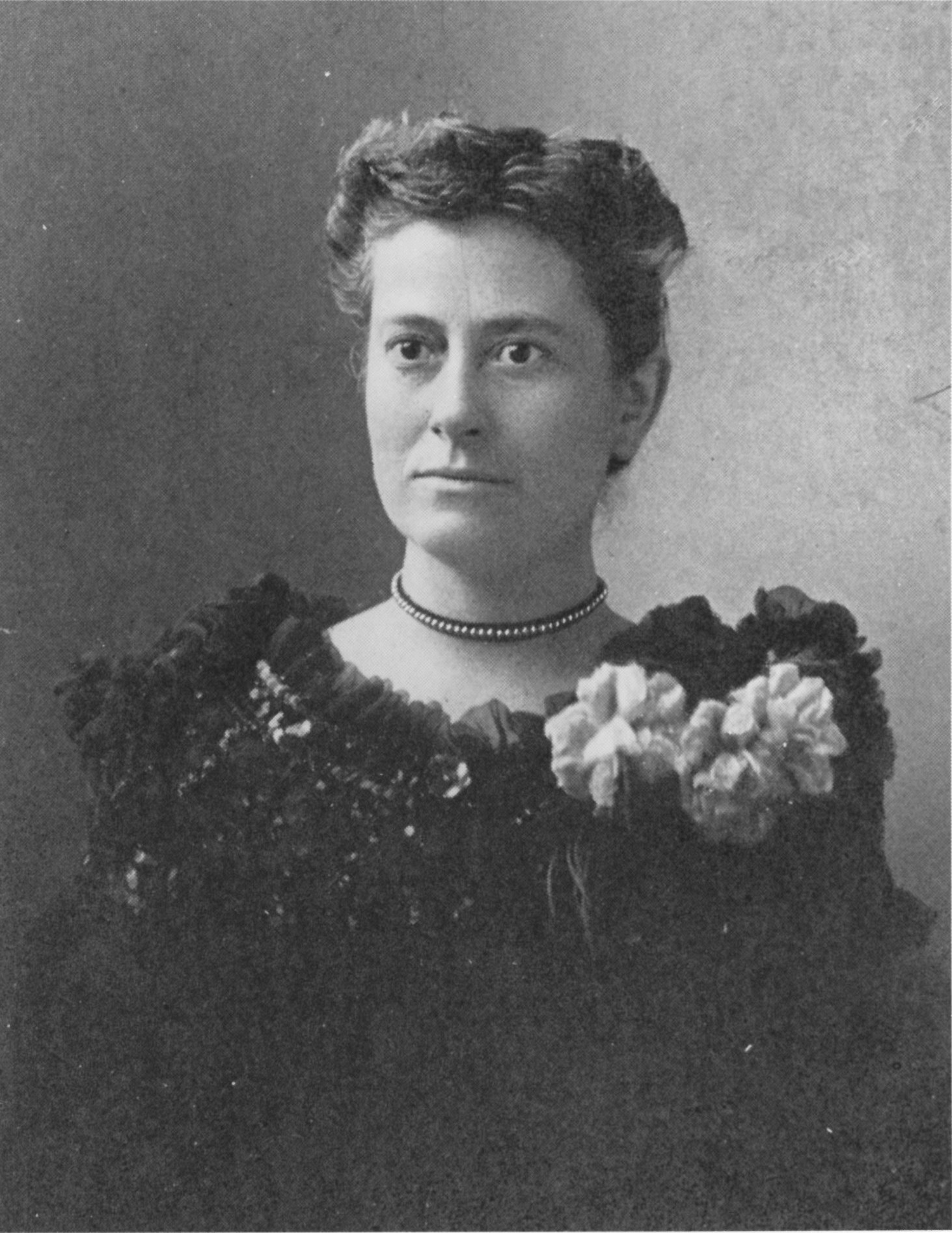
Williamina Fleming

In 1878, in Boston Massachussets, twenty-one year old Williamina Fleming awoke on what was probably one of the hardest days of her life - her husband had left her the night before. In Scotland, where she was born, Fleming had been a teacher, but she had gone with her husband to America, and was only a few months off the boat by the time he left. Now, she was broke and alone, one of a vast sea of immigrants in Boston. On top of everything else, she was pregnant. Heavy in heart (and belly), she went out into the streets to look for work.

It was then that she happened upon the door of Edward Charles Pickering, a professor of astronomy at Harvard, who took her on as a housemaid. She worked hard, raised her child, and lived quietly. It was three years later that Pickering, frustrated at the poor quality work he got from his male research assistants, angrily declared that even his housemaid could do a better job. Little did he know how right he would end up being.

Pickering hired Fleming on to his academic work shortly thereafter, basically to do clerical labor. Soon, however, Fleming showed that she had a startling eye for detail, and an excellent head for complex scientific topics. Within a few years she was contributing significantly to astronomical research, including devising a system for classifying stars based on the amount of hydrogen they burned, using a prism to separate the light they emitted to a telescope. Her work continued for many years, and she is the discoverer of many stars and astronomical bodies, including, in 1888, the Horsehead Nebula.

By 1899, powerfully affected by Fleming's work, Pickering expanded upon his success, and ended up hiring dozens of women in the astronomy department of Harvard. Promoted now to the position of Curator of Astronomical Photographs, Fleming supervised their work.

Known as 'Pickering's Harem' or the 'Harvard Computers', the group eventually produced the first catalog of stars organized by brightness, a system still used (with some modifications, many of which where made by other members of the Harvard Computers) today. They were exceptionally poorly paid, earning little more than a factory worker, but nonetheless produced many of the greatest of the early female astronomers of the United States.

(This post was written in honor of Ada Byron Lovelace Day, 2012)

Read More......

1.30.2011

Hippocrates, and How Science is Born

(Short Summary for those who do not know: Hippocrates is widely considered a forefather of medicine. His collected writings include the Hippocratic Oath, variations of which are still administered by pretty much every medical institution on earth, but also include a broad array of observations and advice on a wide variety of topics of health. Hippocrates was usually thought of as a sort of wise, practical country doctor, who did not get cauhgt in esoterics, but who nonetheless laid the groundwork for medicine and medical theory)

I entered reading Hippocrates fully expecting a laugh. This medicine is OLD. This is before there was germ theory, before there was an understanding of the circulation of blood, before the advent of sanitization, and still in the depths of the four humors theory of physical health, sort of one step above magic.

And in many ways the book did not let me down. A few choice exerts:


  • "A woman does not become ambidextrous" (but men do!)
  • "If you wish to ascertain if a woman be with child, give her hydromel (mead) to drink when she is going to sleep, and has not taken supper, and if she be seized with tormina (acute pain) in the belly, she is with child, but otherwise, she is not pregnant"
  • "A woman with child, if it be a male, has a good color, but if a female, she has a bad color."
  • "[Delirium and tumors] more frequently occur on odd than on even days"
I'm guessing here, but I'm not sure these statements were rigorously tested before being accepted as fact. Other things were just horrifying - though possibly effective treatments given the constraints of the times. And the long descriptions of the various colors, textures, smells, consistencies, etc of urine, bile, feces, sweat, and mucus were, if certainly indicative of a highly observant mind, not the most exciting way to spend one's evening.

But, I DID learn things from Hippocrates, this is what really surprised me. In the first case, he says a number of extremely keen-minded things, things we forgot often today:

  1. Many physicians seem to me to be in the same plights as bad pilots, who, if they commit mistakes while conducting the ship in a calm do not expose themselves, but when a storm and violent hurrican overtake them, they then, from their ignorance and mistakes, are discovered to be what they are, by all men, namely, in losing their ship. 
  2. The vulgar, indeed, do not recognize the difference between [charlatans] and their common attendants, and are rather disposted commend extraordinary remedies
  3. The [medical] art consists in three things: the disease, the patient, and the physician. The physician is the servant of nature, and the patient must combat the disease along with the physician.
  4. I look upon it as being a great part of the art to be able to judge properly of that which has been written (good advice, in fact, for those reading Hippocrates...)
My favorite quote, though, and the one that sums up how I felt about the book is this: 
I say we ought not to reject the ancient medicine as if it were not and had not been properly foudned because it did attain accuracy in all things, but rather... to receive it and admire its discoveries, made from a state of great ignorance, and as having been well and properly made.
What was really awe-inspiring about Hippocrates was to realize how like a scientist he really DID try to be with so very little. Hippocrates throughout the book is basically making up the scientific method out of his head (making mistakes, of course along the way), when it was quite easy to make a living in his field by simply making stuff up, lying, and making excuses for your failures (he even acknowledges this last to be the case, and offers a very compelling argument for both education and for the institution of laws against malpractice - what doctor is doing THAT today?). Some of his observations, from the vantage point of a society that has many, many giants upon whose shoulders we stand, are really very clever: He notices, for instance, that eunuchs do not tend to go bald, or that sneezing can cure hiccups (I had never noticed it, but it really is true!), or that obesity tends to reduce life-span. He goes into great detail not only about how one ought to relocate almost any dislocated joint in the body, but also why his method will work better than others of the time. And all of this he points out with only Aristotles vague, ethereal theory of humors and elements, and a history of glorified magicians to back his practice up.

One thing this DID point out to me that I thoguht interesting is that we (quite rightly) do not use Hippocrates as a medical reference anymore. He's simply out of date. He wouldn't be upset about this (and the mistake of much of the middle ages in fact was to assume that these proto writers were writing inspired things that must be followed to the letter, that wisdom is immutable). However, we still think of, for instance, the philosophy of Plato and Aristotle as being immutably, eternally valuable, and not simply as a building block. Reading Hippocrates, one is naturally led to see his mistakes. But when we are taught ancient philosophers or literary writers, we are taught to gloss over or contextualize their out-of-date parts and respect the underlying wisdom of what they were saying - the same, but more extreme, could be applied to scripture and it's study in modern religion. I'm still mulling over what this difference means - is 'progress' shaped differently in fields that are not science? OR is it simply that we want to believe people then knew something we don't know now? I don't know.

Read More......

1.16.2011

The Relationship Between Significance and Nonsense

I recently read Wicked, which if you haven't read it (that is, you are the only other person on earth, it seems, besides me), talks about the Wicked Witch of the West from the Wizard of Oz, from her own perspective. Honestly, I expected this to be a smirky, silly kind of book, sort of like the children's book where the Big Bad Wolf tells about how he was misrepresented by the three little pigs, only for grownups. In the end, I REALLY enjoyed it (though the end felt a bit forced), and want to read the two sequels now, eventually.


One thing that was VERY interesting to me in the book was how Elphaba (the wicked witch) found meaning in the events around her. If you are like me (I don't know how universal this sentiment is, honestly), there are particular events, concordances, unexpected turns, etc in your life that take on a powerful significance. Some of these events are obvious - if one has, say, a very traumatic event, it becomes significant. Others are not. 

What I loved in the book - and this is something I love in MANY of my favorite books and movies, probably because it is so common to tell a story deceptively to the opposite - is that really, these events, these glimmers of meaning, do not interrelate in a way that one can make a single, sensible narrative of. This feels so personal and familiar that finding it in a book is like finding a piece of myself in someone else. 

Humans are a mythmaking species. For all the trouble this practice has caused us over the years, I think it is, to some extent, intrinsic to who we are - I think for instance it is the root of the idealistic leaping I talked about with Ms Wollstonecraft. There is the macrocosmic version of this of course - religion. But the microcosm exists as well. I think most people gneerate their own personal mythologies, stories they construct about their own internal gods and heroes. For me, at least, time ceases to exist without a narrative to lay it across, and some of the bleakest, most horrifying moments of my life have been those in which I saw my life stretching ahead of me, devoid of any particular story-thread, simply a span of indifferent years and directionless existence, even if this is the more honest way of understanding my life.

The problem, of course, is that life does not always tell a good story. Sometimes, life's stories are kind of awful - not awful like scary and miserable, but awful like, they wander around and make no sense, and at the end you wonder if the author was even paying attention, or if maybe you just were paying attention to the wrong narrative. Like Ulysses (joke. Well, kind of a joke). But we NEED them to make sense - just like our ancestors NEEDED there to be some REASON that the Nile flooded every year and the sun rose, and the winter was cold and harsh. Because without a reason, first of all, the awful things of the world are unbearable, and second of all, the future is scary and unpredictable. In our own lives we do the same thing - how many of us, for instance, comfort ourselves with some variation of "everything in life has a purpose?" In the paraphrased words of Christopher Hitchens, we simultaneously believe ourselves to be the most insignificant of worms, but also that the omnipotent universe has a plan for each of use individually, that the universe loves and directs us as single humans. Maybe this is true, maybe it isn't. IT feels too... easy to be true, I guess, sometimes.

And, yes, this mythmaking makes terrible messes, it makes us do terrible things. What is the classic 'midlife crisis' but a realization that our identity does not match our own narrative? I have done too many things, too many terrible things, because it felt like the way the story should go. Others are better about this than me, but I don't think it's a completely unique behaviour.

At the same time, mythology was a precursor to magic, and magic was a precursor to science, and science a precursor to real knowledge (alter this sentence according to the dictatates of your worldview). And, after all, in some sense, the 'story' that is told by, say, modern astronomy is any ways as awe-inspiring, beautiful, and meaningful as any sun and moon and stars myth, the tale of evolution lists a human destiny as compelling as Ragnarok. Maybe this is the way personal mythologies must work - as a sort of alchemy by which we learn our personal chemistry. But life is so short, so short, and the time to know the weight of your own atoms is so long...

Read More......