Cinderella, Beauty, Objectification and Breakfast at Tiffany's
Recently, a blog I happened across pointed me to this fascinating article about Breakfast at Tiffany's (the movie, not the novella). The crux of the story was talking about how Capote wanted Marilyn Monroe to play the main character, Holly Golightly, as she matched the Holly Golightly of the Novella far more closely than Audrey Hepburn did (as he so glibly put it, can you REALLY imagine Audrey being named Lula Mae, and chasing chickens in Appalachia?), but that if Monroe HAD been in it, the movie would not have worked in the way that it did. I have never read the novella (though, on that note, I'm adding it to my to-read list), so I won't comment much on this comparison. What struck me, and has been gnawing at me since, is the very deft description the author gives of what it is that makes the movie so beloved. As someone who LOVE B at T's, I have to admit the synopsis of it's appeal was a little disturbing. Maybe this post is my subtle way of equivocating, I don't know.
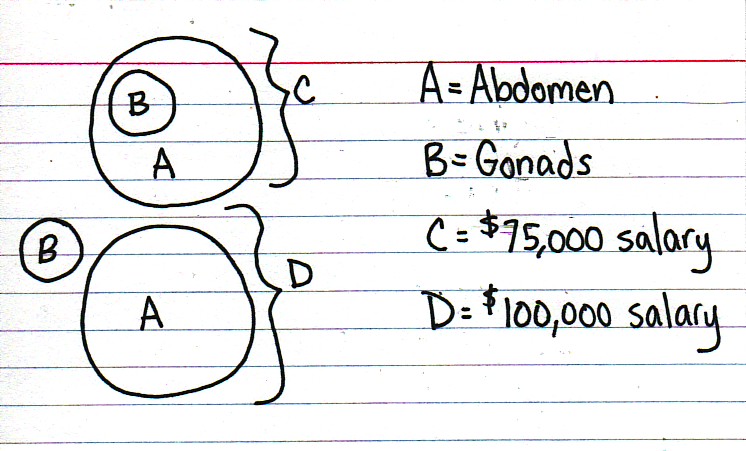
Let me begin this post, by stating the simple fact that I have never been a woman. Perhaps you were aware of this (though if you saw me on Halloween 1999 at this place you may be in some doubt. But no, probably not, even then. I didn't make a very convincing transvestite). Due to the relative location of my gonads I've never experienced how difficult it is to be a woman in a still, I'm afraid, very patriarchal world. So, I don't, unfortunately, know whereof I speak.
That being said, the idea of the Cinderella story has always been a disturbing one to me (and, I think, to many people). Let's take the basic outline of classic Cinderella:
1) Pretty girl is made to do ugly work
2) Deus Ex Machina reveals the true worth of the 'servant girl' (that is, she's totally hot, and nice and quiet. In the Disney version she can sing too, which I suppose is at least a talent)
3) Jealous women in girl's life try to hold her down
4) Girl identifies herself by dint of her helplessly dainty feet
5) Man saves girl, takes her to a castle to take care of her and buy her pretty dresses in exchange for marital duties. I mean... he falls in love, yeah.
This isn't exactly a Gloria Steinem bedtime story, is it? The heroic journey of Cinderella (and it does more or less follow the Campbell hero cycle) is basically a quest to learn how to be decorative. That sounds more like a parody, almost.
And really, in a lot of ways, I can see how Ms Golightly is that way, I won't deny that part of the appeal of the story is the same appeal that Cinderella has: a general bias towards pretty, harmless things. Everyone around Holly treats her like an object, and in the end, when Fred/Paul gives his speech, it's not about respect, it's about ownership:
"People do fall in love, people do belong to each other, because that's the only chance that anybody's got for real happiness. You call yourself a free spirit, a wild thing and you're terrified someone's going to stick you in a cage. Well baby, you're already in that cage, you built it yourself..."That's not an empowering speech: it's a speech that tells Cinderella that, in the end, she needs the prince.
But is that all that it says?
There are a lot of stories, now, that talk about objectification as an empowering thing, at times. How many 'girl power' type stories have the heroine defiantly go out shoe shopping with her friends after getting dumped? And defiant is usually just the word, as if buying sexy shoes was a way of showing the lost man that she is more than he would make her be. On the more 'literary' end of the spectrum, you see the same behaviour. Take this passage from 'A Handmaid's Tale':
The one with the mustache opens the small pedestrian gate for us... As we walk away, I know they're watching, these two men who aren't yet permitted to touch women. They touch with their eyes instead and I move my hips a little, feeling the full read skirt sway around me. It's like thumbing your nose from behind a fence... and I'm ashamed of myself for doing it because none of this is the fault of these men, they're too young.
Again, the woman here is defiant, in that she seizes her RIGHT to be an object, if she wants to, that she seizes the power and freedom of objectifying herself.
Then, I find I'm not ashamed after all. I enjoye the power; power of a dog bone, passive but there. I hope they get hard at the sight of us...
Sex, of course, is the easiest way to show this objectification, and arguably the most common way to make an object of one's self, but not the only one. In a sense, it is the same freedom that makes the horse in animal farm a hero, the freedom to be both more and less than human, when one wishes. It's the freedom of the nun, who renounces the world, and becomes seperate, different, something not quite the same as a woman - and most vitally, in a sense becomes something to many people, rather than someone. There is a power in being something, a very real and very beautiful power, in passivity, the power of renunciation, of knowing that one could have something that they choose not to have.
How does this relate to Miss Golightly? Well, there is an essential difference between Cinderella and Holly Golightly - Holly doesn't let herself win. Where Cinderella would have risen to be a movie star (the closest American's can be to a princess without marrying a Kennedy), Holly abandons OJ Berman to become what is, more or less, a glorified call girl. The glass slipper slips onto her foot, and she walks away. And in the end, when she leaps from the magic pumpkin, there is two interesting things to note: first, that she chooses to pursue the prince who has left her rather than waiting for him to save her, and second, she actually goes to look for Cat, not Fred. In fact, this brings up an interesting part of the story: Holly, in being objectified, does not sublimate (Cinderella in the end becomes a part of the prince, rather than her own person), but rather transforms the entire world into a world of objects, a world where Cat is just an anonymous cat, Paul is forced into the role of Fred, men are just rats, super-rats, or scared little mice, etc.
But this still doesn't answer the niggling question at the end of the movie: if the world is made of objects, if Paul/Fred is an object, and Holly herself is an object, why does it matter to an object whether or not it is owned?
I don't know, I'll admit that right now. But here's the best answer I can come up with.
See, the thing is, objectification isn't the problem - enslavement is the problem. The problem with men looking at women as nothing more than a collection of feelable, ogleable parts is that men then view women as things to manipulated, used, collected, discarded. Empowering objectification is one in which the object maintains it's own autonomy - like I said, it is not to make oneself inert, but to make oneself simultaneously more and less than human. A God is both more or less than human (or, a Goddess), and in many ways this is what you see in objectification, a consignment of oneself into an archetype - Holly, for instance, refuses to be a sex object, and instead chooses to become Venus - the sex Goddess with all her weaknesses and strengths. The classical nun, in many ways, refused to become the wife-object of a man, and chose to become the divine consort, the Virgin Mary as it were - a role with power for her.
Are these objectification healthy? Like meat and sunshine, the answer involves complex questions of individual needs, and a demand for moderation. I will say that it is, for both men AND women, necessary for survival in a hostile world (tell me, for instance, if you think that Walter in Rilla of Ingleside objectifies himself into Athena, the goddess of just war, any less than Holly objectifies herself into Venus?). It's a messy, ugly, destructive thing, but it's also a purifying, simplifying, and beautiful thing - WHEN it is empowering, instead of belittling, when it is willed instead of forced.
Now, I do want to say, that I don't think it's possible for such objectification NOT to be somewhat sexist and degenerative in our current society - after all, Paul's role as the whore of his 'decorator' doesn't make HIM Venus in any way, and it should. I'm not advocating more books about pretty girls winning because they look harmless. But, I suppose, I'm saying that the question is also too complex for us to be dogmatic. Read More......