10.22.2012

"My Funny Valentine"


If you listen to any swing music, its quite likely you've heard "My Funny Valentine", a song written by Rodgers and Hart for the Broadway show "Babes in Arms". I'd certainly heard it many times - to give you a sense of perspective, its appeared on literally more than 1300 jazz, swing and pop albums. The Ella version here is a favorite of mine, but for a little variety, try Angela McCluskey, Miles Davis and John Coltrane, or even Bjork. Honestly, pretty much whatever kind of music you like, there's probably SOMEONE who's covered My Funny Valentine. Heavy Metal... well, I don't know, but I wouldn't be surprised.

The first time I heard this song, myself, it was because we were playing it for jazz band in high school, and I was in LOVE with it. The tune on its own, the chord progression is utterly heartbreaking, filled this terrible longing - if it hadn't been so cheesed so many times by so many people, I think it would still appeal to many people's teenage hearts (to say nothing of adult).

But, we played an instrumental. So, being already a big fan of The Ella, I HAD to go find the song sung by... well, someone. So I did, and I was SO dissapointed.

It isn't that Ella performs it badly (although I have to confess that I have a version of this song in my head, that I've never heard anyone perform). She does it beautifully. So does, say, Barbara Streisand. But... the lyrics?

My funny valentine
Sweet comic valentine
You make me smile with my heart
Your looks are laughable
Unphotographable
Yet you're my favourite work of art

Is your figure less than greek
Is your mouth a little weak
When you open it to speak
Are you smart? 

But don't change a hair for me
Not if you care for me
Stay little valentine stay
Each day is valentines day

They're lovely lyrics, quirky, silly, clever, funny. Not heartbreaking. They felt like they should be a fun little jaunty tune. Something you'd sing with a wink. Something like, say, 'A Fine Romance', or 'Ain't Nobody's Business'.

So, here's the story as to why.

Lorenz Hart, the lyricist of My Funny Valentine, is one of the great show tune writers of the first half of the century, right up there with Cole Porter, say, or Oscar Hammerstein. He wrote a whole row of my favorites - if I had to recommend one, it would probably be Bewitched, Bothered and Bewildered.

Actually I'm cheating a bit - Bewitched is definitely one of my favorites, but it also helps tell a little story. The beginning of the lyrics has a little trick in it that reminded me, when I first heard it, of Valentine: "Love is not a new sensation/I've done pretty well I think,/But this halfpint imitation/Put me on the brink." Two songs, now, where the lovesick singer croons over the physical shortcomings of the lover? Sure, Gershwin wrote lyrics like "Though he may not be the man some girls think of as handsome, to my heart he carries the key," but that sounds, if anything, a bit defensive, not bemusedly indulgent.
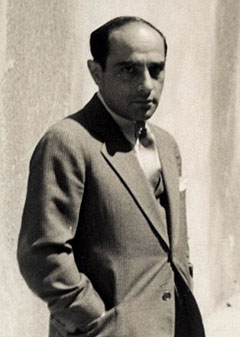


Hart was, is it turns out, an unattractive man - I don't say this to denigrate him, but to paraphrase him. Hart was frequently voluble about his own unattractiveness. Between his ugliness, I'd suggest his lack of self-confidence, and the fact that he was a homosexual in the 40's and 50's, Hart was alone his entire life, and his popular image was of a runty, ugly-faced man continuously wreathed in cigar smoke and the scent of alcohol.

If he had been a cynic about all of this, he would have been the sort of amusing sexless character you see in old movies of the 40's - take, for example, the rival bar owner who buys Rick's at the end of Casablanca. But, the man wrote love songs for a living, and by most accounts, believed every word of them. He was a hopeless romantic, a born lover with no one to love - or at least noone to love him back. Hart was a tremendously lonely man, and suffered from frequent bouts of crippling depression - this same was likely the source of that continual stink of alcohol.

The story of My Funny Valentine comes in here. One night, heart-broken, lonely, and miserable, Hart went into his bathroom, and stared in the mirror. He looked long and hard at the face he felt like a foreigner inside of, and tried desperately to imagine, to conceive of the possiblity, of someone looking him straight in the face, and being in love with him. Then, he wrote what someone who loved him might say to him, what a love song would sound like, if it was sung to him.

The result was My Funny Valentine. Rodgers wrote the music for it, knowing full well where the song had come from. And the song appeared on Broadway, and became an instant hit, a song full of longing, yes, but not hte longing of the singer: the longing of the listener.

Six years later, heartbroken by the death of his mother, Hart got pneumonia, his body broken by heavy binge drinking. He was found alone in a hotel room, when he didn't show up for several days to the musical he was helping to write. He died a few days later in a hospital, and was buried in Queens.

And that's the story.

Read More......

10.04.2012

Racontreuse

It is my way to make the cruel blade laugh,
to entertain the heavy knuckled fist.
I tried too long to tuck myself away,
to be the one that nobody would miss.

And? No fist thrown towards me ever did.
But silence only deepens for so long,
it is a sea that has a fathomed depth.
So I raised a storm of stories and of song

and threw down bolts of just-a-tale among
the fists and blades, and wrap about their necks
a drunken arm. A jolly joking lip
drools bonhomie along their poisoned backs.

And no one misses me -- just like before.
Nobody misses what they've never known.
They glad to see the shriveled limerick,
the hollow-echo-laughter of my bones.

Reduce yourself into a silent stone:
An angry hand will hurl you at its hate.
But silent stones! It still is not too late!
Reduce yourself into a plot device!

Read More......

8.13.2012

Mutter-Love-Songs

I've stitched myself inside you now, my love,
  So cosy-close I'm drowning in your hair
    And worming rosy fingertips,
      Into the weak spots of our seams.

I'm tucked into your corners now,
  To keep your brooms from sweeping me.
    I'm growing sticky-brown and grey
     From capturing the dust of you.

I've put my hands inside your lips,
  Endorsed your gums with snivelled need,
    Shut down your sight, and feel my hands:
      Don't look, love, at my eyes.

Don't look love, at my eyes,
  I'll hide them just behind your own,
  I'll twist and screw them shut with bone,
  I'll tie the bindings closed,
  I'll needlepoint the entry wound I've left:
I've stitched myself inside you now, my love.

Read More......

6.06.2012

Boy's Homework: B-17 Bombers, Week 1: The Memphis Belle

My youngest son, Laurene is a big history fan, so last year during school, he decided to borrow a US History textbook from school and start working through it. Right at the end of this school year, he finished it! So, we decided to take a break this summer and do something easier - so he decided he wanted to study World War II. This summer I will be posting some of the things we do together to learn about the War. If people don't find this COMPLETELY boring, I might even put up some notes about what its like trying to plan a WWII curriculum for a 3rd grader (hint: its an interestingly difficult process).

Well, the first topic he wanted to learn about was bomber planes - which was perfect, because I remembered a movie about bombers from when I was a kid: Memphis Belle. If you've never seen Memphis Belle, its a pic VERY loosely based on the real Memphis Belle, a B-17 bomber that was one of the first to complete a full tour of duty in the Daylight Bombing runs over Europe. It returned to the US and flew around the country, so the crew could stump for War Bonds, and generally buck up people's courage. The movie itself, though, while not a great introduction to this specific historical event, does help to lay out some of the bare bonnes of how a B-17 worked: what the jobs were in the crew, what the rhythm of a bombing run looked like, what the various difficulties involved were, etc.

So, for our first week, Laurence and watched the movie, first, and I talked it over with him to make sure he understood it. Then I gave him two activities to complete.

The first was to design his own B-17. I gave him a lesson on Nose Art (again, difficult with a third grader, as one attempts to avoid Nose Art featuring naked women), and we went over what the different positions on the bomber were, again. Then he designed his own nose art, and assigned people he knew to the different crew positions on his plane - interestingly he decided to use other kids from his class at school, and additionally interesting (although indicative of Laurence in some ways), he did not assign the pilot's seat to himself. He was also frustrated that he felt like he had to assign all the positions to boys, since, in World War II, only men were allowed to serve in the combat arm of the military (this is not a constraint I put on him, he just thought it would be unrealistic to do anything else). It was interesting to see how frustrating it was to him to not be able to put ALL his friends with him. If you're the interested, he named his plane "The Texas Tartar", and the nose art featured a horseman with a sword (yes, my son is a geek).

For his other assignment, I told him to write an essay about the dangers of flying a B-17 bomber. Here's what he learned this week, then, in his own words:

In Memphis Belle, there's a story where the pilot and co-pilot were sitting in the cockpit. Suddenly, flak (bits of metal exploding like grenades) hit some tomato soup on the counter. It splatted on the captain and co-captain and they kept yelling at each other because they thought that each other were bleeding. This is funny, but it also expresses how dangerous it was to be on a B17 Bomber in World War II. On a B17 bomber in World War II, there were a lot of dangers.

In the way, your bomber could get shot down by fighter planes, because they will shoot bullets at you until one of the planes dies or explodes. It could also get shot down with flak. Flak is an explosive covered in metal. When it's shot out of an anti-aircraft gun, it explodes in the air. When it explodes, it would have pieces of metal fly everywhere.

In a B17 bomober, it can get down to 30 degrees below zero. Thats because the planes fly above the clouds. If you weren't careful, your fingers could freeze onto the gun (if you had one). Your saliva could come out of your mouth and freeze in your headset. Then you wouldn't be able to hear what the other people were saying.

In a B17 bomber, there's a lot of different ways to blow up while trying to land safely. You could try to belly land and have your plane go too fast and have the friction explode your plane. Belly landing is when you land your plane without taking your wheels out. You would belly land because your wheels wouldn't come out. You could also put your wheels out and have only one wheel come out and make your plane go out of control and explode.

In a B17 bomber there's a lot of ways to run out of gas. Your plane will fall if it runs out of gas. It could have some of its engines blown off by bad fires or flak. It could have to go around the bomb run twice because they didn't see the target they were supposed to drop their bombs on.

Imagine how scared you would be if you were on a B17 bomber. I would be terrified! There were a lot of dangers one a B17 bomber in World War II.
This week, he is watching 'Twelve O'Clock High' and thinking about what officers had to do to be good leaders of their men, AND designing his own board game. Next week, notably will be on Stalingrad, so if anyone knows any good, appropriate sources on that, I'm THRILLED to hear suggestions. Or on the amphibious battles of the Pacific, which he wants to do next, after that.

Read More......

5.03.2012

Things Unsaid

My eyes were telling you,
Why can't my eyes be enough?
My hands were broken winged birds, and
My tongue lay on my lip like a stiff-boned fish,
And love could not revivify its clouded eye,
Its slime-suckered gill.
Why can't my eyes be enough?

Read More......

4.15.2012

Race and Gender in The Hunger Games

Well, everyone else has written about it. I was beginning to feel left out.

Let me begin by saying that I am not the most authoritative speaker on the Hunger Games in the blogging world. I imagine tha twoud be a highly contested title. And I can guarantee I'd lose it. Lawks, I'm not the most authoritative speaker on the Hunger Games IN MY HOUSE. I haven't even read the second and third books.

Yes, there will be spoilers

I mostly only wrote because I finally picked up on something very interesting to me - in District 11, the home district of the much mourned Rue, the citizens are publicly whipped if they are caught stealing bread. And, they're black (to clarify - they usually have very dark skin, and they are geographically located in what is now the deep South - I am interpolating the rest myself, though this seems to be the most common interpretation, and that of the movie).

I don't know why I didn't put this together when I read it, but the I-almost-have-it feeling I got when originally reading the book, with Rue and Thresh, finally clicked, and I realized where I recognized Rue from - "Birmingham Sunday" (I highly recommend the Joan Baez version, if you don't know the song - the song itself begins about 1:00 in). The story behind Birmingham Sunday is a simple one - it retells a real incident, where the black church headed by Martin Luther King was bombed by white extremists. Four people were killed: four young black girls, all around 12 years old.

Now let me tell you what I almost wrote next - "Four young girls, innocent of any of the trouble of their times. So young, so beautiful, and all ended." I stand by that - and I stand by my affection for the emotional power of Baez's performance in the song memorializing them. But the description is troubling in a number of ways - why do I remember this song more than, say, the equally poignant 'Emmet Till'? "Young girls," "Innocent," "Beautiful."

The same words of course could be applied to Rue (or to Katniss's sister, Prim, notably), and her death strikes the same string (I admit it, I cried, in the book and the movie). The formula is a very effective one. Take a little girl, it helps if they're slender and beautiful, tell them to offer up innocent eyes. You'll notice that you never have to watch Rue kill anyone. The closest she comes is to suggest to Katniss how SHE can kill the people who are waiting to murder her (Katniss, too, only kills when forced to, a different, interesting thing to consider. If she had fought for her life by killing, say, Foxface on purpose, even when Foxface made no attempt on her life, how would that change our perception of her?). The story could just have easily have involved Rue cutting down a hornets nest in her OWN tree to save Katniss. But it doesn't.

Because, we want Rue to be pure, when she dies, we want her to be innocent. It is interesting, now, to trace this backwards in the history of American race relations. Rue, yes, in the Hunger Games. Or the girl who is raped and murdered in Grisham's 'A Time to Kill'. Birmingham Sunday. Or go way back - there is Eliza in 'Uncle Tom's Cabin'. To get sympathetic white people riled up and willing to stick their necks out for their disadvantaged black brethren? Kill a fresh faced young black woman. If there is sex involved, all the better. Now, draw this narrative out to its logical conclusion - when a grown black man is beaten or killed, as a society, it affects us, sure, but not quite so viscerally. And for many of us it doesn't relaly affect us at all. When asked we might say its sad, but the underlying feeling when a black man is killed is that he's just a part of a rash of these murders. Think about the stereotypes of these murder victims - drug dealer, gang banger, petty criminal. These black men (or, older black women who carry their own stereotypes. Or unnatractive or non-docile black children - see 'Topsy' in Uncle Tom's Cabin) are not sufficiently innocent for us to really mourn them, in our collective consciousness as a nation. We mourn them differently. When a newscaster tuts over them the 'what a waste' is looking backward - he could have been so much had he not driven himself to here, instead of 'What a waste, he was so much, and cut off so young,' the way we feel about our Rue-characters.

Keep in mind, for a moment, that Rue clearly had a strong will to live. And so did Katniss. And that, eventually, one would have had to kill the other if noone else had. If Rue, to save herself and feed her family, had in some alternate version of the story, ended the book by pushing Katniss out of a tree, would we hate Rue? We hate, say, Glimmer, after all.

The horror of the Hunger Games, after all, should not be that it kills innocent children. ITs that that it takes innocent children and makes them into monsters. That is one of the things I loved about the movie (that, in Collins' defense, the structure of the book would not have allowed) - that after Rue dies, you see all these men, all these, essentially, slaves, rise up and start to push over their master's edifice of slavery, not from any kind of blind race hatred, the way we portray these actions now (take, say, the LA Riots and our national understanding of them), but rather out of love, and desperation. You love them, you ache for them, as they rip over the grain scales, and get in fistfights with the riot police. That was one of the victories of the movie for me - it doesn't glamourize social upheaval, it doesn't say that those men made any real difference - they didn't. But it tells that anger and frustration, even violently so, is a real, human emotion, with real, human causes, and that its presence as part of our culture, today, is not simply somethign to be tutted over - its a sign that we have promises that need keeping, broken hearts that need mending, love that needs to be given, apologies to offer.

Read More......

4.13.2012

Passing a Man in the Hallway


I looked at him and only saw: his beard,
His tight-trimmed hair, his square-boned, jutting jaw.

Ungenerous instincts of the victim.

I watched him watch me lace up lazy lips,
And pull the cheerful corners of my mouth
Into a casual kindness, one that shouts
'Hello'.
And leaves it at that.

Imagination crippled, fear invoked,
By nothing but a shortened chromosome.

Ungenerous instincts of the victim.

(image from mkuhn)

Read More......